How Smart Pricing Strategies Drive Profit and Freedom for Service-Based Entrepreneurs
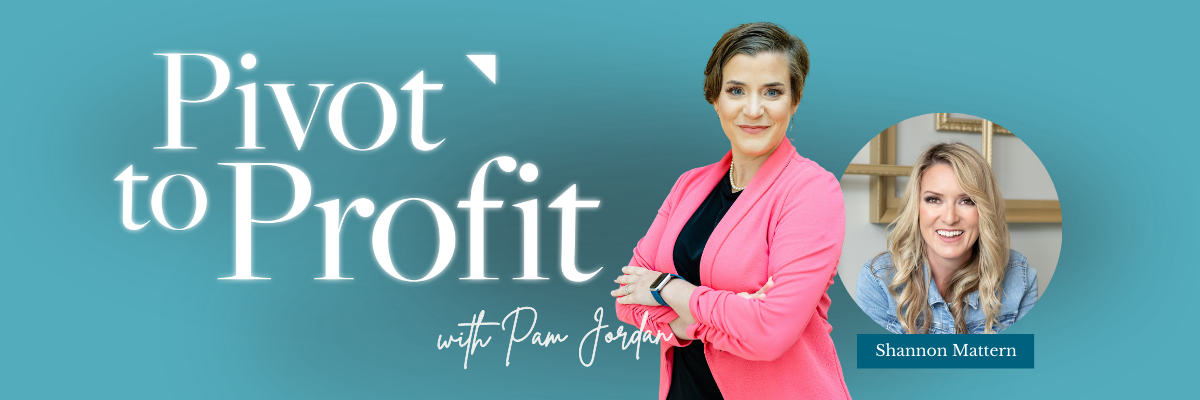
In a recent episode of the Pivot to Profit podcast, Pam Jordan sits down with pricing expert Shannon Mattern to unpack one of the most misunderstood levers in business growth: pricing. For service-based entrepreneurs, the conversation highlights a critical truth—profit isn’t about working more; it’s about pricing smarter.
Shannon’s journey began like many others. Raised with the belief that money is earned strictly in exchange for time, she followed the traditional path: college, corporate job, and climbing the ladder. After 15 years and landing in an executive role, she realized the model she had been taught wasn’t delivering the freedom she expected. That moment sparked her transition into entrepreneurship.
Starting as a freelance web designer, Shannon initially priced her services based on hourly rates—mirroring her corporate mindset. But this approach quickly proved unsustainable. Despite delivering high-quality work, she found herself overworked and underpaid. The turning point came when she recognized that clients weren’t paying for her time—they were paying for results.
This shift to value-based pricing transformed her business. Instead of charging based on hours worked, Shannon began pricing based on the outcomes her services created. The result? Higher revenue, better clients, and significantly improved profitability.
A key concept she now teaches is that pricing is positioning. When entrepreneurs underprice their services, they unintentionally signal lower value. By offering tiered options—allowing clients to choose between investing more time or more money—business owners can better align their services with client priorities while increasing margins.
The episode also emphasizes a common mistake: pricing based solely on costs. While understanding expenses is essential, Shannon explains that cost should only establish the floor—not the final price. True profitability comes from aligning pricing with the value delivered and the problem solved.
Today, through her Web Designer Academy and consulting work, Shannon helps service providers break free from underpricing and burnout. Her approach empowers entrepreneurs to build businesses that support their lives—not the other way around.
For business owners looking to increase profit, the takeaway is clear: stop selling time and start pricing for value.
EPISODE TRANSCRIPT
0:00
Welcome to the Pivot to Profit podcast, where we believe that understanding your numbers is the key to freedom of time and money.
Because at the end of the day, it's really not about what you make, it's about what you keep.
So each week, we're going to bring you real stories from real entrepreneurs who have faced the challenges of growing a business.
0:22
We'll also dive into how numbers have helped and sometimes hurt them, and gaining clarity over their finances has unlocked new levels of profit and freedom.
Hello and welcome to today's episode of Pivot to Profit, where we have an amazing entrepreneur here to share her story.
0:41
Welcome, Shannon Madden, How are you?
I'm doing well.
Thank you so much for having me.
I am so pumped to have you because Shannon is a pricing specialist who works with experienced service providers and consultants who want to make more from the work they're already doing.
0:57
And you talk about profit, you talk about pricing.
So we are already fast friends.
I love this, so let's dive right in.
What did you want to be when you grew up?
Oh my gosh, I.
Wanted to be a.
Chef and I.
Also thought.
That I could be a Muppet.
1:12
I did not realize that they were not real and I wanted to be like on the Muppet.
Show so yeah those.
Were my two big ambitions as a child.
I love that for you and I'm so sad that you couldn't grow up to be a muppet.
I know, disappointing.
But as a chef, the question what's for dinner comes every night, so I'm sure you can still without your chef dreams.
1:34
Exactly.
So what were you taught about money as a child?
That's a great.
Question I.
Was taught that you.
Earn money in exchange for your time and that is the only way to make money and your goal in life.
1:51
Should be to like educate yourself so that you can raise the value of your time.
So that you can sell your time for money.
So the message I received was make sure that.
You like do really well.
In school, make sure that you figure.
2:06
Out a way to go to college.
Because we can't afford.
That, but that's.
The way that you're going to be able.
To like do better.
Than we did and make sure that like your time is really.
Valuable so that.
You can get the good paying job, climb the corporate ladder and like you know.
2:21
Be safe, secure.
Save for retirement work.
Till you're 65.
And then you can enjoy the rest.
Of your life after that.
Right, so you can live your life later when you're older and yeah.
Love and.
Hopefully you're healthy and you know all of the things, yeah.
So part of your journey started following that path.
2:39
So you did go to college, did get the corporate job, and then decided, no, this is killing me.
So tell us a little bit about that early journey in your career of like, yes, checking off all the boxes.
I'm doing the right things to bring me that wonderful freedom in 50 years.
2:55
Tell us that story.
Yeah, I was the best.
Employee you could ever want now.
I was the team player.
I went above and beyond.
I was going to make myself invaluable and indispensable.
Because that's what.
You know, it was like security comes from someone else paying you that paycheck and the biggest risk is doing something.
3:16
Where you could lose that.
And so be good, be a team player, work really hard, you know, do all of those things.
And I did that for, you know, 15 years, you know, out of out of school.
And then one day I had climbed up into an executive role and I was sitting in my office, my beige, windowless office, and under fluorescent lights.
3:41
Yeah.
And I just.
Started to.
Have a panic attack and I was like I cannot do this for the rest of my life.
Like is this it is this?
Everything that I was, you know, working so.
3:57
Hard for I had.
I was in an executive marketing role at the company that.
I worked at.
And I had also been in charge.
Of all of our.
Website projects and also like taught myself web design along the way.
It was a small nonprofit.
We wore all the hats.
4:13
And so.
I had also like.
Built some of our some of our websites and things like that and one of our vendors had like reached out to me and was like.
Hey, who built?
The continuing education website you guys use and I was like.
Oh, I did that like I just figured out.
How to do that?
4:29
And he goes, do you do any work on the side?
And I was like, no, but I could sure why not.
And he was like, well, how much do you charge?
And I'm like getting out my calculator.
Well, this.
Is what my?
Salary breaks down.
To hourly so.
That much and he's.
Like you're hired, sold.
4:45
Let's get started.
That was kind of the.
First inkling that like, oh.
Maybe there's something else?
Out here for me.
So from that first moment, how long till all the freelance dancing and the web development and the nights and weekends until you were like, peace out corporate job?
5:04
I'm going to hang up my own sign and say Shannon is open for business.
It took me.
About 3 years of.
Trial and error because my goal was I'm like I.
Got to replace this.
Salary I'm not leaving the six figure job with insurance paid for like I had the golden handcuffs on right and I.
5:20
Was way too risk averse to just leave.
So I'm like, I'm going to hustle so hard and I'm going to at least replace my salary.
If I can do do that two months in a row, then I'm putting my notice in.
Well, what I didn't realize is that I was never going to do that.
Charging hourly and selling my time and trying to like price.
5:39
The way that I was.
Pricing.
I was pricing based on my like, my perceived costs and my perceived.
Value I was like.
I didn't go to school for this.
I can't charge as much as like an agency.
It was so focused.
On and I was also like and this is really.
Easy like.
5:55
Anybody could do this.
I taught myself.
I figured why would someone pay me?
I had so much mind trash around my value pricing money and so I really spent.
Those three years.
Having building excellent websites for clients.
6:12
But it was a.
Disaster on my.
Side it was completely.
Unsustainable.
I quit doing that all together and I was like well if it's so easy why don't I just teach other?
People how to do it, I'd heard about.
Affiliate marketing.
I was like.
Oh, I could.
Just teach people and earn affiliate commissions off the back end.
6:27
I went that.
Route for a while.
Started making some money doing that, but then people were like.
Yeah, this is great that you're.
Teaching us how to do this for free.
But I don't want to do it.
Can't I just pay you to do it?
And I'm like, what is happening here?
Like I'm showing you how to do it for free and you still want to pay me like I had.
6:44
So.
Much messed up money mindset stuff and then finally it dawned on me like they're paying for.
The value of the.
Outcomes and results that they can create.
As a result of.
This revenue generating asset that that I've created for them, they're paying me so that they don't have to spend their time doing it and.
7:06
That costs them so.
Much more than they could ever pay me so.
It was like a.
Three-year journey of me figuring out like.
What I do is valuable.
I can charge way more for it and I'm not ripping people off and I'm not taking from them and it's not the the money doesn't work the way that my parents told.
7:25
Me that it worked.
You know, growing up, that was kind of.
That three years of just.
Like trial and error and just learning a whole.
Like learning that the world worked differently than I thought it did.
Exactly.
And it's amazing because sometimes it does take three years to rewire our brain and figure out what we bring to the marketplace does have value and we need to charge for the value that we bring, not a low hourly rate.
7:51
And all of the mindset trash using your term is weighs so heavy, especially a lot of female entrepreneurs.
We have all of these beliefs that like we can't charge as much and I don't have that degree or that certification or I haven't been doing it long enough.
When in fact, what we're bringing to the marketplace is beautiful and valuable and we should be charging accordingly.
8:12
Tell me about one of your early financial wins, either freelancing or out on your own where you're like, I can do this.
This is going to work.
I think it was that.
First month that I was like, I made my salary this month from web design projects, from commissions, from the affiliate marketing stuff that I'm doing from all of these different places.
8:34
I'm like people.
Are.
Paying me for something that I love doing and it is so fun and it is so much better than this day job.
That I really.
Don't love.
And I remember that that moment was like.
8:51
OK, this is possible.
This is absolutely possible.
Let's do this one more time and I'm putting my notice in.
And so it was.
Really just.
Yeah, just realizing like adding it all up and being like.
Wait, what did I?
Let me double check that number like.
Did I do it?
I did it.
9:07
That's fabulous, fabulous.
And so once you turning your nose and you were full time doing the web design, you talked about moving to value pricing.
So once you started raising your prices, how did that, what ripple effects did you see from that?
9:23
Were clients screaming?
Were clients?
Yes, revenues go up, profitability goes up.
What did all of that look like for you?
Well, for me, I.
Was still terrified to do it right, so I was just.
Like is someone really going to pay 3000 for?
A website 5. 1000 for a website you know and I.
9:38
Was I was really.
Still kind of like testing and and like playing around with like.
How I talked about.
It and oh realizing like oh I'm not selling A10 page website I'm selling you know that you're going to actually convert more of the traffic into leads and like learning how to talk about it and then I I met someone his name is Paul Klein and he had.
10:01
This podcast called.
Pricing is positioning and I had.
Started a podcast called Pep Talks for Side Hustlers which I.
Ran for like 3 years and Paul came on and he was teaching me about the concept of pricing is positioning and anchoring, price anchoring and I was like this is the missing piece for me.
10:19
Because what was?
Happening for me and a lot of my.
Other colleagues who are.
Running different kinds of service based businesses.
Is that we were.
Providing like first.
Class level of service, but still just.
Charging like like business class prices.
Right.
And so.
10:35
Yes, I was making more money, but on the flip side, I'm I still had an employee mindset where I'm like, well, the more you pay me, the harder I have to work, the more.
Responsive I have to be Yep if you text.
Me at all hours of the night because you paid me this much.
10:50
I need to.
Like be on call for you.
They didn't ask me to do that.
That was just still my messed up employee mindset coming in.
And so when Paul taught me about how pricing is positioning and how to anchor high and all of those.
11:06
Things I was like this solves.
So many more problems than just being able to charge more.
I can differentiate between like.
Do you value your?
Money.
Or do you value?
Your time and I can put some options in front of you that if you don't care more about your keeping your money and spending your time, great, I can give you something that you can take over the finish line if you don't want to touch it at all and you want me to.
11:29
Be at your service.
I'm going to charge way more for that than what I've been charging and.
I can put these.
Options in front of you and let you.
Decide do you value.
Your time or your money?
Because before.
That I was deciding.
For them, because I thought everybody just valued their money more than their time and then once.
11:47
I tested that out.
I was like, people are.
Choosing my highest price package and the highest.
Level of service.
Even when my expense mindset mind was.
Like expected.
Them to want to pay the least amount so that's really.
Like the big?
Shift that happened when I started being like here are your options.
12:06
We're going to fly from New York to.
LA either way.
You're going to walk away with what you need.
What do you want that experience to be like?
How much work do you want to put into it versus what I'm doing for you?
And that shift like changed everything.
So let's bring profit into this.
12:23
So a lot of service providers think like just selling more, getting more clients, selling more packages is the answer.
So when did you target in that?
It's actually what I keep, not what I make.
When did profit show up for you as the answer?
You know, when I had started doing some affiliate marketing and I was like, oh, let me teach people and I'm just going to like build this big audience and you know, I'll earn my affiliate commissions off the back end from the hosting companies and the e-mail marketing companies and all of.
12:51
That that was like, great.
I was earning like $5000 a month in commissions and then I was like, oh, I'm going to like sell a course to them.
I'm going to teach them how to how to market their business.
So I all this time ever energy resources, whatever into selling this like $97.00 a month membership and that thing was harder to sell than.
13:13
A5 figure website.
And that's when I.
Realized I was like.
Oh, you know, it's.
Just like it is just as easy to sell.
Something for five.
Figures as it is.
To sell something for $97.00.
13:28
So why not just put my time, effort, energy and resources and to selling higher?
Ticket offers.
Maybe I don't sell as nearly as many, but it's way more profitable and way less time for me.
And so I think like I don't know if you were consuming online business content in the 20 Fins 2020 era, but that.
13:51
Was like, everybody was like.
Build an audience.
Scale.
Sell a course.
Like all of the things I made money, but I didn't make the kind of money that I wanted to be making.
And I was working so hard and the.
Overhead for that of all of the.
Tools that you need and to really make it work, you have to invest.
14:09
In paid ads which I dabbled.
Here and there, but I really wasn't.
I'm risk averse, right?
So I really wasn't going to.
Like I just.
Couldn't get myself to do.
What would have been required to like, grow that?
Big and so.
Yeah, I think.
It was the realization that like, oh, the amount of effort and resources that I'm putting in to do traffic marketing and build this huge audience to sell.
14:34
A lot.
Of something that's priced really low when I could just work.
A lot less.
And price appropriately and do the work I need to.
Do to really shift?
My money mindset and get really good at selling something like that.
Is way more lucrative and profitable.
14:51
Than doing it the other way.
You also talk about creating a business that supports your life instead of the other way around.
Tell me about that and how you've created the life that you love now.
So since.
Starting working with web designers and, or working doing freelance web design and like all the pricing in the business stuff and solving a lot of those, those challenges.
15:12
I also started getting web designers coming to me and saying, how are you doing this?
And I'm like, you know, I have all my systems.
I can teach them to you.
And, you know, let's.
Just do like a. 12 week thing and every week you can come and I'll like teach you everything I know.
15:28
That was about.
That was like 20/16/2017 that I started doing that and that grew into what is now the Web Designer Academy.
And I stopped doing freelance web design in 2019 because the Web Designer Academy had grown so much that I'm like, this is it.
15:47
This is my favorite thing to.
Do is to help.
Other women overcome the challenges that I.
Had like.
I want to shortcut it for them.
I don't want them to spend 3 years.
I don't want them to have to spend that much time touching the stove as I say, to then figure out on their own all of the things that I.
16:04
I figured out.
The hard way and.
So part of that.
Though part of being able to grow that business was getting really clear on my boundaries and when I do work and when I don't work and all like all of the things that I learned in my freelance web design business that like.
16:25
Oh, I get to.
Set expectations on how communication's happening, when it's happening, when it's not happening, all of those things upfront that.
Is what I brought to.
To what we do now and that's what I teach our students and so.
It really was about like sitting back.
And being like, what is my vision for my perfect day?
16:43
My perfect.
Week, my perfect month, my perfect season and then very intentionally building the business around that and I say like I have a saying Mondays and mornings are mine.
I do not schedule client stuff on Mondays.
I don't schedule anything before noon and I had to just guard that time.
17:03
It's.
Possible for us, right?
If you don't.
Believe that your clients are the boss.
And you believe it's a collaborative?
Partnership and that you're the leader and that you're the one running the show and that it's your business and you get to make all of the rules, which we didn't get to do in.
Corporate.
But if you believe that, you can do that.
17:19
In in your business, then you.
Absolutely have total power to create the.
Balance that you want.
You just have to believe that it's safe.
And that all of your clients won't leave and that they, you know, there's.
All of this stuff that we.
Have to overcome like, Oh well, they're going to be disappointed if I don't get back to them right away.
17:37
And then, you know, you spiral into they're going to tell all their friends to never work with me.
And you just have to unwind that conditioning that made you.
Be the good girl who's.
Going to make sure that they keep their job.
And behaves and be the star student in your employer and make them wealthy and have them succeed in life when you're sitting there in a beige office dying.
18:00
So now you're spending your time investing in females that want to become web designers and consulting.
So tell us what you're doing these days and how you're helping and supporting that community.
So like I said, for the past. 10 years now, wow.
18:18
We've been helping women web designers who kind of found themselves.
Where I was just like it's a.
Hot mess.
They're not charging right?
And you know they have.
All of the skills.
And they want to make more from the work they're already doing.
Work less.
Stop letting their clients treat them like.
18:34
Their bosses so.
We've been doing that for for 10 years and.
We also like, we just taught them pricing strategy, right, We taught.
Them this the.
Sales process we taught.
Them how to structure their offers in the way.
That I shared earlier.
Of like putting options in front of your clients that allow them to decide whether they want to spend their time or money.
18:52
We call that the package matrix and we've been doing that for years.
And then last spring I had gone to.
A retreat with some.
Other entrepreneurs of all different industries and, you know, now we're just talking about what do you do?
And I was sharing, oh, I, you know, help them with pricing and packaging and all of this stuff.
19:08
And then we're kind of getting into the meat of everything.
And the same exact words are coming out of these women's mouths.
Like that I hear.
From web designers on the challenges that they're having dealing with clients, pricing, like all of the things.
19:24
And I'm sitting here going like they're saying the exact same things I've been hearing out of the mouths of women web designers for 10 years.
It's the same and so I was.
Like guys I have this tool.
That I think maybe would help.
You it's.
Called the package matrix.
I'd love to like share it with.
You if you think it would help and so I've had like a ballroom dance studio owner digital marketing.
19:43
Agency podcast producer.
A perfumery like so many different.
Types of industries apply this strategy to be able to like.
Test out raising their prices and set boundaries with their clients and.
Shift out of cost.
Based pricing to value based pricing and so.
20:00
That's really what I've.
Been doing this.
Year is like.
Taking that package matrix and pricing strategy, pulling it out of the Web Designer Academy and introducing it to more types of business owners who are experiencing like, how can I charge more than everybody else when everybody else is charging this and the market rate is this and the going rate is this, and people don't have money or I'm already at the top of my rate.
20:26
How can I shift to that and just helping them with all of those challenges?
That they have.
So that's the work.
That I've been doing and it's.
It's so fun to see different business models and how we can package matrix.
Their offers?
This is fantastic.
When it comes to pricing, the mindset is a huge piece and the limiting beliefs and I don't have the value and people are undervaluing.
20:47
But what do you see people are doing when we're looking at the numbers and messing up when it comes to pricing?
Because as CFOs, one of the first things that we do with our client clients is help with pricing because there's so many things that people get wrong when it comes to pricing.
But in your experience, not the mindset piece but the actual like numbers and the calculator, where do you see people making mistakes when it comes to pricing?
21:11
They figure out their.
Cost for delivery and.
That's what they use for their price.
They're like.
Oh, in a perfect world, if I want to just like the mistake I made back in the day.
Like, oh.
I want to make this much money and it's it's even still, it's like I want to make this much money.
21:30
These are my monthly expenses.
This was This is what I think I should.
Set aside for taxes.
So this is my.
Hourly rate.
And I think that a web design, this web design project is going to take me this many hours and therefore this is the price.
21:46
And I'm like, you're missing so much.
Opportunity here to.
Not make the.
Price about you that.
Number is important to know, like I'm not saying like we just don't figure that number out.
We need to know that number.
We need to know the cost of you running your business and meeting your obligations but.
22:04
Also, that's the floor.
And how do you take that number then and?
Look at who's?
Your target market What?
Are.
Like what are their problems that you're solving?
What are the value?
What's the value of?
Solving that problem how?
Do you solve that?
22:20
Problem for them and then building your price from there going no lower than your cost.
Absolutely.
I love it.
When we do pricing.
We always start at the bottom of the PNL.
How much profit do we need?
What's our overhead?
What are our direct costs?
22:36
And that's what we're going to charge.
Like you're not asking ChatGPT how much do other people charge for this in my area that is neither here nor there.
Completely irrelevant.
Yeah, it all.
You've got to understand your direct cost, you've got to understand your fixed cost, and then you've got to make sure that you're profitable.
22:52
Like I've seen so many people just take their direct costs and like double it or triple it or at 30% or some arbitrary number that they're pulling out of nowhere.
And I'm like, OK, but you realize the more you sell, the faster you're going to be broke because selling more to loss just makes you broke faster.
23:08
So it's amazing how many people make a huge misstep with their pricing.
And then they're hustling to fix it.
Or cover it.
Or.
They don't know what's going wrong and they burn out and they go back.
To their corporate job or.
Whatever ends up happening.
23:24
Absolutely, 100%.
Let's go, let's fix it.
Come on.
So as the CEO of your business, what numbers do you track monthly to make sure that you're on track and you're do have the life that you want to live with the money that you want in the bank so that you can have that flexibility and that freedom?
23:42
All of them.
We we project project.
Like what our expenses?
Are so we?
We have a budget and a plan for like.
What do we?
Expect to spend every single month on everything that we need to run the business tools team, you know?
23:59
Taxes.
All of those.
Things then we look at, you know.
What?
What are we?
Expecting to come in, you know, based on like.
Previous years.
Based on seasonality and based on like what we're planning in terms of our marketing and looking at.
24:15
Just cash flow too, so like if.
We're if we know.
Let's say for US.
November, December and January.
Are usually like lower.
Months for us, then making sure that.
We either have the cash flow to cover that because we expect that.
24:31
Or we make some decisions to spend less because we we expect to not have the.
Cash flow for that so.
We're looking at all of that every single month.
I actually do an income report on my podcast every single month where I look at the previous month.
24:47
I look at like.
What was our inflow?
What was our outflow?
How much did we add to our?
Reserves, maybe we had to take some out why and what were all of the lessons that we learned along the way?
And that is hugely helpful for me to reflect on it in a way that's like different than just.
25:05
Like, oh, there's either.
A+ or A minus, you know the PNL at the end of the month and, and really reflecting on that so.
I look at all of it, we look at all of our K.
PIS too.
How many people?
Came to the website, booked a discovery call like.
All of those things are those trending up, trending down, What do we need?
25:22
To look at SO.
I might be a.
Little obsessive.
About it, but it's necessary.
Absolutely.
You have to know your numbers.
You can't succeed as an entrepreneur and as a founder and a CEO if you don't understand your numbers.
I love it.
So, Shannon, what is next for you?
What's on the horizon?
25:37
Yeah.
So I think.
What's on the horizon for me is testing out package matrix with more service based businesses and more types and seeing how creative.
We can get with that strategy.
Like, it's been the linchpin of our whole entire Web Designer Academy program for the past 10 years, and now we're like building, like bringing.
25:58
Outside of that to help other people.
So that's.
Really what's next, but also business as usual, growing the web designer Academy, continuing to help women web designers, continuing our profitable web designer podcast.
I I think about that day when I was in my beige windowless office under fluorescent lights having a panic attack.
26:20
And I also think about every single day now I'm like.
I get to.
Do what I.
Love and how?
Is this my life?
And it is such a difference and there is no way in this world.
I would ever go back.
And work for anyone else.
Ever.
I will take all of the risk.
26:35
Uncertainty.
All of the challenges, all of the unexpected.
Things the good the bad like this is.
Million times more rewarding than.
That ever was.
Shannon, this has been fantastic.
Where can people go to connect with you?
Yeah, you can go to shannonmodern.com and from there, if you are a web designer, you can get on over to our Web Designer Academy website.
26:59
And if you're a.
Service provider you'll.
See more information there on our.
Anchor high strategy.
And our package matrix.
This has been awesome.
Thank you so much.
Look, listener, if you need help understanding your numbers, you don't understand, you don't know what KPI is to even track.
27:15
You can't even find your numbers.
We would love to help you with bookkeeping, fractional CFO, tax strategy, and tax filing.
We help service providers get all of that done in one house.
Just go to pamjordan.com, schedule a call with my team.
That's all for today's episode of Pivot to Profit.
Remember, it's not what you make that matters, it's what you keep.