Eli Facenda on Turning Business Spend into First-Class Family Memories
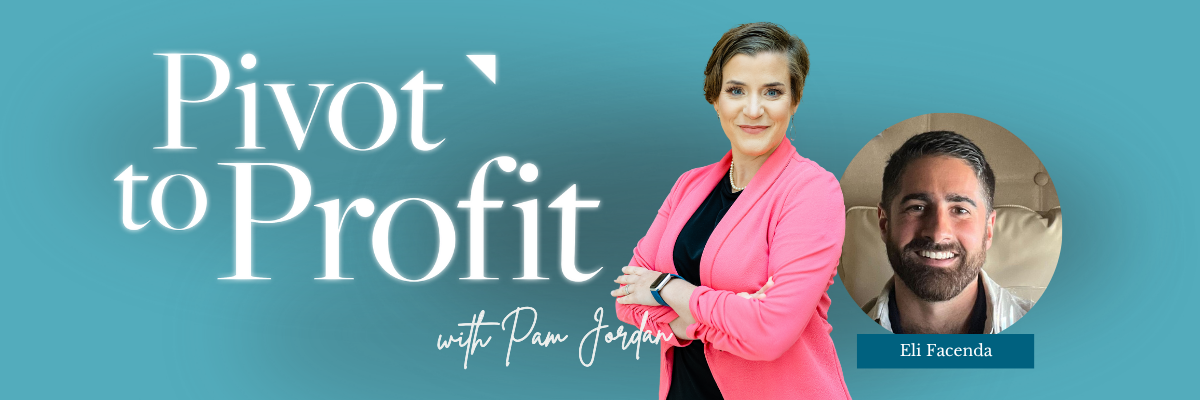
On this episode of Pivot to Profit, Pam Jordan interviews Eli Facenda, founder of Freedom Travel Systems—better known as “Eli the Travel Guy.” Facenda helps entrepreneurs convert everyday business expenses into luxury travel, showing how points can fund $50,000+ trips for a fraction of the cost—and why those experiences matter.
Facenda’s journey runs from college baseball to building travel companies and, finally, a concierge that designs points strategies for founders. His philosophy centers on “experiential wealth”: measuring success by the memories created with people you love. For entrepreneurs who delay vacations “until someday,” he flips the script—use travel as a forcing function. Time away exposes broken processes, builds leadership, and returns founders with sharper vision.
From a CFO lens, he notes a powerful advantage: points are tax-free. Pulling $50k from the business for a trip could cost far more after taxes; redeeming points can deliver the same experience for a few hundred dollars out of pocket—freeing cash to reinvest in hiring or growth.
Facenda’s simple framework to maximize results:
Earn smarter: Use the right mix of business cards to average ~2–2.5 points per dollar and collect transferable points (e.g., Amex, Chase, Capital One).
Burn better: Avoid one-cent-per-point redemptions in bank portals. Transfer to airline/hotel partners to achieve 3–5x (or more) value on premium cabins and luxury stays.
Leverage perks: Elite status, lounge access, upgrades, and VIP amenities stack meaningful comfort and savings.
Two planning rules drive outsized value: plan early (set up the right cards before you need them) and build light flexibility (shift dates or depart from major hubs for big international trips). Use points for long-haul premium travel first; pay cash for simple domestic hops.
Beyond tactics, Facenda pushes founders to book the trip now—points are “permission slips” to create peak moments with family. Favorite destinations: Japan for mind-bending culture and service, Italy for endlessly rich food/history/scenery, and Uganda for bucket-list gorilla trekking.
EPISODE TRANSCRIPT
0:00
Welcome to the Pivot to Profit podcast, where we believe that understanding your numbers is the key to freedom of time and money.
Because at the end of the day, it's really not about what you make, it's about what you keep.
So each week, we're going to bring you real stories from real entrepreneurs who have faced the challenges of growing a business.
0:22
We'll also dive into how numbers have helped and sometimes hurt them, and gaining clarity over their finances has unlocked new levels of profit and freedom.
Hello and welcome to today's episode of Pivot to Profit.
If you're an entrepreneur with credit cards that has lots of points and you're like, what do I do with them?
0:42
Today's guest is about to blow your mind.
I have Eli Vascenda with me.
What's up, buddy?
What's up, Pam?
Good to be here.
Excited to dive into all things points and miles and credit.
And it's gonna be a fun show.
Let's go, let's go.
So let me officially introduce Eli is the travel guy is the founder of Freedom Travel Systems where he has helped thousands of entrepreneurs turn normal business expenses into 50 $1000 plus dream trips and 1st class for less than economy by maximizing points.
1:15
This is brilliant.
I met you at an event recently and we were talking about what you do and I was like, Oh my gosh, you need to come talk to my audience.
This is magical.
And BT dubs like I have so many Amex points and I don't know what to do with them.
So I'm so excited to talk to you.
So what did you want to be when you grew up?
1:31
Because I'm pretty sure that like the travel guy and the point guy might not have been it.
Definitely not.
I mean, later in my life around after college when I really started getting into travel, I was like, this is my passion.
So I kind of followed it there, but early on and I'll take us back to growing up in Vienna, VA, just down the street from you.
1:47
So for those listening, Pam and I actually went to the same high school, which is crazy.
We connected the dots were like, no way.
So any Northern Virginia homies shout out to you guys.
So we both went to James Bass in high school.
So definitely, definitely, definitely, definitely baseball player.
I mean, MLB player was for sure the dream job, you know, and that was going to be the plan until I basically stopped growing and I realized, OK, I'm 57, I'm pretty good, but to make it to the pros, that's probably not going to cut it.
2:09
And that happened around 10th grade.
And at that point I was like, I don't know what I want to do.
So I kind of just, you know, followed different paths until I kind of landed in travel actually right out of college.
And that was, you know, it's been my entire career actually doing the points stuff is last five years.
But I spent about 7 years before the points game in the travel industry doing some other things we could talk about if we want to.
2:28
But it's been my passion ever since I kind of found like an actual career.
I love it.
So baseball player was the goal and then Heights came in.
We actually did go to the same my school, I'm older, but it's so funny that we would connect those dots and like, hold up, where'd you go?
So it's always fun.
2:44
Like it's a big, big world, but then all of a sudden it doesn't seem so big.
What did Eli, little Eli, growing up in Northern Virginia, what was he taught about money?
Because for people who don't know, this is directly out of DC.
So it is a very different world because DC is a different ecosystem than anywhere else I've lived.
3:06
So what were you taught about money as a little kid in that environment and from your parents?
I love this question because, you know, it's been a big unpacking for me over the last several years, especially as I've, as I've started to get deeper into the world of kind of personal finance, business finance optimization and how points into play.
3:23
I've just been thinking about these things a lot and like, where did I get my blueprint?
Where did my DNA come from?
And it's, it was an interesting blend because I grew up in a house, My dad comes from Italian immigrants, my mom's Jewish.
So by nature of that, there was quite a bit of like money scarcity beliefs in our household.
I wouldn't have labeled it that until more recently when I look back.
3:40
But when we were at the last event, one of the speakers, a guy, David Baer, who's an incredible personal development, spiritual development kind of coach.
And he was like, okay, go from the gut.
One word growing up, fill in the blank money.
It blank like what's your thing?
And I was like, the first thing was like, doesn't grow on trees, right?
3:57
It was like that kind of mentality where it's like money is scarce.
It's hard to come by.
You have to hustle for it.
He'd go at any time.
So these were a lot of the kind of beliefs that I had and that you really need to play it safe with money.
So my dad, you know, I grew up watching him.
He he worked pretty hard for everything he earned and he kind of followed like the millionaire next door playbook where it's like he's owned multiple real estate properties, but you never know.
4:17
He didn't really spend it much, never lavish.
And I think there's some beautiful things I learned from that.
Also some things that I feel like are kind of limiting that I've had to break free from myself.
And it's part of, you know, sometimes you rebel from your parents patterns.
And so part of the reason that I was like screwed.
I want to travel the world in first class as much as I can was because I wanted to experience the sense of really coming alive and like not having a life that's confined by practicality and being able to experience more and kind of find my middle ground in that too.
4:42
Because, you know, obviously need to use reason and logic can be smart as well.
But that's kind of the upbringing for me financially.
Yeah, and that's so true because the scarcity piece can dictate so much.
And I see some entrepreneurs like still trapped in that scarcity mindset.
And so it's so exciting to see that you were like, no man, like first class, let's go.
5:02
I want to see you.
And having nice things are like growing up in Northern Virginia for me.
Like James Madison, you turned 16 and you got a Porsche or a Beamer like.
And I rolled with a Honda.
So like.
Yeah.
No, we were the same thing.
Yeah, exactly.
Yeah, like so much wealth and and all of that environment that we grew up in, but then might not have been hearing that at home.
5:22
So, yeah, money doesn't grow on trees.
Amazing, amazing.
All right, so baseball in college, right.
So went to college to play baseball.
What was our degree like?
Were you going to classes like?
What did that look like?
Yeah, so for those watching this, you'll be able to see it.
For those not, I'm holding up two fingers right here.
5:39
So our coach, because I played baseball there, he said, hey, here's the order of priorities school baseball.
So he's say in the right order, but he'd be like, school is second, baseball's first.
So I went to school for baseball.
Let's just be clear about it, OK?
I barely got into Lehigh University, probably shouldn't have gotten in, you know, but the admissions works with the athletic department pretty well.
5:55
So I got there and I was like, I don't know what the hell I want to do.
I was like, I have no clue.
At that point, I realized baseball wasn't a career.
I was like, maybe a sports agent, but I was always, you know, I was always growing up.
One of the things was like, I was very creative and growing up when I was I guess between the ages of like 10 to 20, when I would think of things, I didn't know the word entrepreneur.
6:11
I thought it was called being an inventor because that's my grandpa told me he was like inventing products and things and like he would always kind of come up with trinkets.
He was like basically was being an inventor.
So I remember in sophomore year I learned the word entrepreneur and I was like, oh, what's that?
And it was like, oh, that's like a business owner who creates things.
Like that's cool.
So very intrigued by that.
But I was actually a finance degree and the reason I picked it was I was like, I don't know what I want to do, but I know that I want to like be able to be kind of agile and do a bunch of different stuff.
6:35
I knew very early on that the traditional track wasn't for me, but I was, I knew that if I had a finance degree, I'd be able to understand business and how money works and how finances flow through companies and that be a really helpful degree.
So what happened was I went to get the degree and I got really close to kind of getting caught up in like the golden handcuffs track.
6:51
Like everyone starts getting internships on Wall Street and then you're in investment banking and then you eventually get a private equity.
That was like pull, like the force was like pulling me down that path.
And I kind of had like a early, you know, quarter life crisis.
And I was like, what am I doing?
Like, I know that this is not for me.
And, and it basically turned out where some other opportunities opened up for me to get basically an early stage entrepreneurial exposure right out of college.
7:11
And so that was where I went instead of going to like the Wall Street route.
Amazing degree to have.
I don't think I've used a lot of what I learned, but it did create a really strong foundation for financial acumen to be able to run businesses.
And that's been a huge blessing.
Yeah, because money plays with everything.
Travel, owning a business, helping other people.
7:28
So how did you get into travel?
Yes, you love to travel, but then how did you make it a business?
Because that's amazing, because so many people will be like, yeah, I'd love to travel for a living.
Sure so well, the first company I got into right, so this is actually my high school baseball coach from James Madison with a huge mentor of mine.
7:43
He's nationally renowned coach gets on stage, you know, he's a bigger guy, like pretty heavy set guy, but hosting like purple rain in front of 500 people and make them all like die laughing.
Just this charismatic figure been there for 40 years, like leg everyone in the town knows him.
One of these characters, and so when I was in high school, he got invited to lead a baseball team to the Dominican Republic.
8:02
So I went down to play.
It opened my world to travel culture to other dimensions of life that I just did not, you know, growing up in DC, like you said, it's pretty wealthy area.
And we'd be going out of the Dominican where it's like, I'd be looking at all these kids on our team, like, OK, we're playing the game, we're having a good time.
But I'd look over at the other dugout.
Kids didn't have shoes.
8:18
There was chickens running around behind the dugout.
There was naked babies running around the outfield.
But when I looked at the smiles on their faces, they were way happier.
They played with so much more passion that So immediately I got filled with curiosity, right?
And I was like, this is crazy.
So that that was my first travel experience.
The reason bring it up, though, is that coach, when I was coming out of college, he started a company to take these sports teams on international tours.
8:37
And it just so happened I was studying abroad when he was doing his first trip and he was like, hey, can you help us out?
I said, sure, I got into it and he's like, we want you to be our first employee.
So that's how I actually got into travel was basically being the first employee in this company, essentially an entrepreneur.
And I learned a couple really key things. 1 was just like basically make yourself irreplaceable.
8:53
I read Linchpin by Seth Godin and I was like, if I do so much stuff, I create massive amounts of value, they're going to have to give me equity and they won't have a choice.
And so that's basically what I did.
Every opportunity I had was like, give me that, I'll do this, let me take care of it.
I got it.
What about this project Built a lot of value, got some ownership.
And then the second thing I learned though was that a mentor told me that the the ultimate resource was resourcefulness.
9:12
And at this point, you know, I was, had a bunch of friends on Wall Street.
I had a business that wasn't making very much money.
I was driving Uber, coaching baseball lessons, working at a restaurant and I wanted to travel.
So at some point I, the light bulb clicked and I was like, oh, this thing I'd heard about credit card points.
I bet that could help.
9:27
I started researching it and then I, I got these instant experiences where I'm 24 years old making $25,000 a year, but I was walking on to business class flights to Europe that worth their cost $6000 and I was paying $6.00.
So I'm around like millionaires at 24 and broke.
I've cracked the code to the universe.
9:44
So I got obsessed with it.
And then years later is when I saw the opportunity in the market to basically create a consulting offer as a side hustle to help people with maximizing points.
I thought it would just be the side little thing.
And then as I got into it, it just took off.
Like people needed it, they wanted it, the market was ready for it.
We were the first people still probably the really the main people doing it specifically for business owners.
10:02
So a little longer answer, but that's basically the the journey that I got into within travel and entrepreneurship.
So when did you start your own firm, Freedom Travel Systems that focuses on that teaches them how to utilize their points?
When did that form?
Yeah, so, and initially I tried to launch this the first time.
10:19
The first I had the idea for it was 2018.
In 2019 I was like, I'm going to do this.
And then, you know, life got busy or other companies growing didn't work. 2020 came around and this thing happened.
Oh yeah, COVID really bad for international group travel companies.
OK, so not great for my industry.
So our Tour Company was scaling and then it got decimated overnight.
10:37
We went from 4 million, we were on pace to do 4 million that year.
We went to 150,000.
Like that decimated the business.
But I tell you, opportunity, I was like, okay, this is my window to start this consulting thing.
What I didn't know, I thought Kobe was gonna be over in two months.
So I was like trying to market, going to market.
Like, hey, this credit card points thing, when Kobe is over in two months you're gonna take trips and then like two months later be like when Covad is over in three months, you're gonna take trips.
10:57
So Long story short, it took me Pam, I'm not even kidding.
This is embarrassing.
So maybe it's, you know, grit or maybe it's stupidity, I don't know.
It took me 15 months to get my first 300 sale.
It's exactly so I stuck with it.
And then, you know, it was a really slow growth in in 2020 was basically the launch and then 2021 we started to get a little bit of traction started to come back.
11:16
And then 2022 is when things were really started to get a little bit hockey stick for us and travel came back.
I started to build a team.
I learned how to market and sell and package and deliver without me being involved in all of it.
And that was like the the first actual year of going full time with the company was like end of 22.
So we've really been running it full time for about this is like our Year 4.
11:32
You said in the middle of that all that was a golden gem of you learned how to do it without you having to fulfill on it.
And that's the secret to scaling because if Eli is required for everything, there's a cap on how much revenue you can make.
And so by building those systems that don't rely on you, your team could rinse and repeat and you could go do what you do.
11:52
Yeah, absolutely, 100%.
I knew from an early point like where I wanted to focus and didn't want to focus and being the points delivery expert was the way that I look at things.
I skill set and energy and I was like, OK, I'm really good at it, but an energy like it didn't feel energizing to me to be the one on the calls all the time.
12:09
So I did it for the first year and a half or so and it was fun, but I knew early on I was like, that's the first hire I have to make is someone who's better than me on the fulfillment side because this is just not going to scale long term.
And I was still building another company from the first two years of it.
So it took a while to kind of get there, but eventually once we got to click, it was just like total liberation.
12:24
Then I had to learn about service debt and how to scale the back end team.
So that was a whole other thing.
But the first constraint was like, remove myself from fulfillment.
I got that out.
It was, it was a big, big lift.
You talked about experiential wealth.
Define that for us and what it looks like.
So experiential wealth is a currency of wealth in your life that is essentially an accumulation of the moments and memories that you create with the people you love.
12:48
It's the experiences that you share.
It's the moments that pay.
You can think of it as a memory dividend.
Does it actually mean?
It means when you look back on it, you can smile and you can get that hit of energy, the warmth, love, the joy, the fun, the laughter by reflecting back on these beautiful moments in your life.
That's experiential wealth.
13:04
And I think it's a really important thing for entrepreneurs to understand because so many of us, we get into business with this idea of like, we're going to create freedom.
And then you get wrapped up in the business and then it spits you out ten years later and you're like, where did the decade go?
Oh my God, I have two kids and they're 9 and 12 now.
13:19
And like, Oh my God, like the clock's ticking.
Like I don't have them.
But you know, it's really easy to get caught in that very easy.
Like it's the natural path if you're not intentional about an alternative.
And so experiential, Well, it's kind of a, it's a philosophy, but it's also a way you can really start to think about how am I quantifying the memories that I'm making each year so that when I am on that rocking chair, 8090, a hundred years old, old, hopefully you're at the biohacking conferences.
13:40
So maybe 120, who knows.
But you're looking back and you have these smiles of fulfillment of the memories made because at the end of the day, in my belief, like the money is a tool to create impact, to create freedom.
But ultimately, you know, freedom for what?
For us to share moments with people we love.
And so that's what experiential wealth is about.
13:56
It's about the moments with people you love.
I love it and it's so true because so many entrepreneurs struggle to step away from the business because they haven't replaced themselves and they're just head down.
And I tell people there's no amount of success in business that makes up for failure at home because there's so many families that get torn apart.
14:12
I've had lots of buddies that prioritize their business and now they're alone, right?
And they're an ex-wife and are living a whole nother life without them.
So how do you help entrepreneurs with the mindset of it's OK to step out?
It's OK to take that trip to wherever with your family or that month off, Just like the money mindset, but like the mindset of it's OK to disconnect and go take this trip.
14:37
How do you coach people through that?
I love that you're asking this question.
First off, I just want to commend you because most people don't ask that.
And if you're listening, this is the most important part of the podcast that you're going to hear about anything else that I say we're on points because this switch, it's the difference maker between the clients of ours that are traveling the world with their family, creating lives that are just like so fulfilling.
14:55
They're alive, they're magnetic, They're like, this is amazing.
And the ones who are like, ah, I just can never find the time.
The first thing is you can think of this point stuff we're going to talk about.
It's your permission slip.
It's a justification tool.
What points do is it allows you to be like, I wouldn't normally fly $15,000 first class flights, but like, if it's on points, it's 200 bucks.
15:13
Let's freaking go.
That's the first thing is we understand that these points, yes, it is a currency, it's not Monopoly money, but I believe in treating them like a permission slip to have experiences that you want to have, OK, Ideally peak experiences using points to upgrade a flight.
That's a 2 hour flight domestic, it's an OK, it's an upgrade in the quality of your travel.
15:29
It's not going to be something you remember when you're 90, right?
What are you going to remember when you're 90?
Was you surprised your wife and kids with a trip to Italy that they didn't know about?
You covered it all in points.
You're going through the gondolas in Venice.
You're going to get Gelato and see your kids eat that for the first time that do you remember?
So that's the first thing.
15:45
But the second piece is I think entrepreneurs need to have an inverse relationship to how most of us relate to vacations.
Vacations in time away should not be an optional thing that you'll get to when, when you want to, you actually need to use vacations as a forcing function.
And So what I mean is if you think of Parkinson's law, which is basically that work will expand to fit the time that we allow it to.
16:04
If you have a deadline, if you say once 1/4, I go on a week long trip and I don't work, I don't take my laptop or whatever, I log off completely.
That is now your target for sprints.
That is now your deadline for goals and when you step away, if you're actually trying to build a business, I can work without you.
This is the time we are forced to see what works without you versus what you can get by being the banded and crush for and I'll tell a quick story in this about a year and a half ago I started to come up with this philosophy.
16:27
I was like, well, I need to live it myself.
So I decided where you in South America.
I'm gonna take two weeks off for the first time since I built a business, like completely off.
And I was because I knew that some of the systems were not ready.
And I kept convincing myself I'll get there soon.
I'll get there soon.
I'm like, no, screw that.
I'm freaking tired.
We're getting burnt out.
I need time away.
16:42
I need to become refreshed.
And you know, that's where the creative juices come from.
That's where new ideas come from.
We all know that experience of like, you're on vacation and all of a sudden you're like marketing strategy out of nowhere, boom, like stuff like that.
So I decided I'm gonna take 10 days off.
And I remember really a really powerful moment because there was a project that came up like the day before I was going to go.
16:59
My first thought was, OK, I'm going to send a meeting or message to my team member.
We'll hop on our first kickoff call.
Then we'll have a second call to review it and then maybe in three weeks the project will be done.
And I was like, wait, shoot, I'm not going to be here for 10 days.
How do I get this done?
So I was like, OK, I guess I have to figure something else out.
So I was like, I'll create a document and then we send a loom video to them and tell them to connect with them.
17:16
Here's the outcome.
You guys need to have this done by this time.
And all of a sudden, that opportunity was always available.
Like I could have thought like that the whole time, but I wasn't forced to.
And by forcing myself out of the business, I actually had to create better leaders on my team.
And I came back and a couple of things, Pam freaking broke.
And it was a disaster for two days.
17:32
And then I knew, OK, this is what I need to fix.
This is the area, it's a blocker.
So the next time I went on a big trip, I actually went away and we had one of our best months ever.
I was gone for 10 days that month in June this year and all the things are an issue.
The last time I took a 10 day, 2 week trip, they weren't issues.
We had some other ones come up, but now that's the next blueprint.
17:48
So long answer, way to say you need to use vacations as a forcing function for goals, as a time to give yourself creative space, to be a bigger, bigger visionary and to test the healthier business without you and let it reveal the areas where it's broken.
It'll be painful in the short term, but actually much better in the long run.
So we got to flip vacations on their head.
18:05
This is huge unlock people, they really grasp it.
I freaking love all of that.
That was magical.
So first, I love that the points give us the permission slip because it's not like it's not like it's money coming out of my pocket sitting there waiting for me to use.
And then second of all, stepping away as an entrepreneur is so powerful.
18:23
I personally do this in my own business.
And the key for me is it when I step away, it reveals really quickly what's broken and where I'm the bottle and where I'm the problem.
And I cannot see those things if I'm, you know, elbows deep grinding in the business day in and day out.
18:39
But when I step away for, you know, four day trip for an event or a week long trip with my family, when I come back that next day, I know exactly what all my problems are.
Can't see those problems when you're in the weeds of it.
But when you step out and you take that trip and you make those memories and you have that experiential wealth, that's when it's like neon lights.
19:00
I'm like, hey, over here, this process is broken.
How about you fix it?
So I love the you flip that script because there's so many entrepreneurs that are always one day, one day, one day.
One of my buddies recently passed away about two years ago and he was always the one day, you know, one day I'll do this, one day I'll do that.
19:16
And dude had so much wealth and a beautiful wife and family and it's just like one day, one day.
And then one day didn't come because he wasn't here for it.
And so as entrepreneurs, don't let one day be one day.
Let it be next week.
Let's go.
So please, listeners, if you're an entrepreneur, please take this to heart.
19:34
Go talk to your partner.
Go talk to your spouse.
Put it on the calendar and then let stuff break.
And then you know what you have to fix.
Right, I mean, you're going to be fine.
It's never going to be perfect.
I don't know any entrepreneurs.
Maybe like two people that I know have like sold their business and had this like parting of the clouds of chaos in their life.
19:50
It's never going to be a perfect time to take a vacation ever.
Like even I don't have kids yet even and I feel that way.
So like people who have families like extra.
But one thing I will say on that note, I said I actually had a very similar story recently.
A buddy of mine in my Tour Company days, we traveled the world leading ice hockey teams all over the world.
And so we had a lot of.
20:05
Travel experiences together and I got text about 3 weeks ago, maybe a month ago, and his wife texted me and said, Hey, I regret to inform you, Simon passed away.
He was battling skin cancer.
I didn't know really.
And like it was, it was a nine month thing came out of nowhere, 51 years old, healthy guy and he passed away.
20:20
But it kind of punched me in the gut because it's very similar what you're saying.
But it was such a visceral moment.
She was like, I want to schedule a time with you because I need to figure out what to do with his 2,000,000 points and how to keep them.
And I'm like, this guy literally died with millions of unused points.
Like, like, what are we saving them for?
You know, it's a little bit cliche, but it was so real.
20:37
And I was like, on a call with her, be like, yeah, you got to call the bank here.
I'm just like, hit me the whole time.
Like, these are permission slips.
They're like fun coupons that we should be using the cash in for the juice of life.
And so, you know, on a practical sense, these points aren't an appreciating asset.
So it's like, you know, if you can use them, like, let's go like this is the time.
20:55
So I always tell people we don't want to blow them on, you know, getting into some practical stuff here.
You don't want to blow and completely waste the points because that's just silly.
That's not that's not a good use to them.
But just hoarding them for like the someday retirement trip.
You just never know.
So I'm right with you on that.
And I think it's a it's a scary, sad message, but it's an important one for everyone to remember.
21:13
Too.
Yeah, it's a reminder for all of us that that permission is waiting for you and your kids are.
So we've got three kids, they're all teenagers.
Life is insane.
But like we only have so many summers left.
And so we're just trying to take advantage of them.
So OK, let's get into the practical because you are an expert in how to use points.
21:31
And as a fractional CFO, I love business credit cards for my clients.
There's a good debt and there's a bad debt.
And we do cash, we do profit first.
We do lots of ways to help manage your money so you don't carry debt month over month, but responsibly used business credit cards are an amazing tool for a business to build business credit to leverage cash flow.
21:50
If you've got a float for 30 days, but also this magical thing called points or the money back programs.
So teach us, Yoda.
So first thing, First things first, let me just touch on this because we're looking at it from a CFO tax strategy lens.
Points are tax free, right?
So this is huge benefit when you think about this.
22:06
Let me give an example for you.
So in December last year, I knew I was going to propose to my fiance and I was like in Austin, TX, my style.
I just like doing big, big experiences, right?
So I was like, I want to go go to Europe and like take her on this awesome trip.
I was doing the retail.
I know I knew the points.
He was like let me let me see what this will cost.
Normally this is a $50,000 experience.
22:21
We flew Emirates first class, two people from New York to Milan, has an in flight shower, in flight bar, Don Perion Caviar.
It's an insane experience.
That alone was $20,000.
Just the one way flight for two of us.
If I was going to pay for it flying back, Virgin Retreat suites, awesome stay.
We stay at the Park Hyatt in Paris.
22:38
We stayed at the W Hotel in London.
Really nice experiences.
So $50,000 trip.
Now, if I had done this the normal way and pulled money out of my business, I'd take a $50,000 withdrawal, whatever your tax bracket is, let's just call it 25%.
The effective cost of that trip isn't 50 grand.
It would be 62,500 because I'm tipping Uncle Sam 12,500 in order to get the 50 out of the business, right?
22:59
So not only did I take the cost of that trip from 50 grand down to about 2500 out of pocket, I saved the 12,500 that I would have had to pay to the government.
And what does that mean I get to do?
Well, we brought on a new onboarding expert and specialist into our team.
And that money like that could have been a vacation or someone who's making a product better, right?
23:16
So you can reinvest those savings in the trips.
That's the first thing you want to think about.
The money saved, what it allows you to do is kind of similar.
We're talking about before it's a permission slip.
You don't have to have trade-offs.
It doesn't have to be, oh, this money can hire the next person, or I could invest in the college fund or remodel our deck.
You get to have both now.
23:31
So that's the first thing you understand.
Beyond that, what I like to do is create like a simple kind of three-step framework.
This gives us a bucket and a way to chunk things and keep it simple.
So I'll high level cover these and we could dive into each one, but the first one is going to be to maximize the points earnings, OK.
23:46
And so this is going to be getting the right cards and the right expenses.
We're going to earn the right types of points in the most of them.
The second one is going to be to maximize the points earnings.
And so this is how we use them.
So are we cash them out for vacuums on Amazon when that same amount of points could have gotten you a first class trip to Paris?
Or are we being strategic and leveraging what we call points arbitrage, which is where you stretch the value of points to get 2345X, sometimes even 10X value.
24:10
So that's the second step.
Is points burning really how we maximize the value of points?
And then the third step is really going to maximize your upgrades and perks.
So this is getting hotels to upgrade the five star resorts.
This is getting first class upgrades for free, airport lounges, better VIP kind of experiences, amenities, all that come with credit cards you already use or status tiers you can hit through the right spend.
24:29
So if we look at all three of those and you were to think, how am I doing on a one to 10 on each of those, that gives you an idea of like how to maximize what's possible for you.
And so those are the three buckets that once you kind of have a vision of what you want your travel like to look like, those are the three kind of how's to actually make it happen.
I love it, I love it, but so then, once we understand where we are, what do we do next?
24:50
Yeah, so if you want to, well, actually that's a helpful thing to understand.
If you want to get a snapshot of like what's possible for you, basically take your annual credit card spend between the purse, your household and business.
And if you maximize your points, well, you can be getting around 9 to 10% back total on that spend.
OK, So if you spend 1,000,000 bucks, that could be 90 to $100,000.
25:07
And here here's how I'll just break it.
Simple math.
For every dollar you spend, if you have the right cards, on average you should be earning around 2.5 points for every dollar.
So use that $1,000,000 in in spend.
If you spend 1,000,000 bucks, that should be 2 to 2.5 million points earned.
If you have the right points, you can maximize the value of how we use them.
25:23
And there's different ways to use these points.
The the baseline value that the bank wants to give you though, if you go directly to Amex, this is a mistake.
This is the trap that most entrepreneurs fall into.
Amex makes it really easy for other banks to redeem them through the travel portal.
We do not want to do that.
OK, that's going to be what we call 1 cent per point or each point's worth a penny.
25:39
So that 2,000,000 points would be worth 20 grand if you go there.
But if you leverage them strategically by converting them is that you move the points from the banks to the airline hotel loyalty programs, which there's nuances to it when you do this.
Well, we on average or this year are getting on 100 million points for deemed 5X the value to the same 2,000,000 points is not worth 20 grand.
25:59
It's worth 100 grand.
So that's how if you spend the money and you get the right amount of points and the right type and then that gives you the ability to use them.
Well, you can go from maybe getting what most people get is on $1,000,000 in spend, they might get $10,000 back up to 90 to $100,000 back in the form of travel.
26:14
This is not cash back.
You can't do it like that because that you can't you know double 555X the value of your points.
You're cashing them out.
You have to use them for trips.
That's a requirement for that.
But if you do that, I mean, again, that's let's say the average European vacation for a family is 40 grand for flights and hotels, business class and luxury stays.
26:31
That's two trips there and a couple epic domestic trips per year.
So if you have a family that's a European vacation for maybe two weeks in the summer, maybe you go in the winter even you get a Caribbean getaway and a domestic trip.
That's an insane year of travel, $100,000 potentially saved.
That's what I call being an experiential millionaire because if you save $100,000 a year on travel for 10 years, you've saved $1,000,000 on experiences and you'll get that experiential wealth.
26:53
So that's kind of the full frame.
And because you're using points, it's tax free.
Like I don't know how to jump up and down on this anymore.
That like yes, you can just apply those points at 1 cent a pop and pay down your balance.
Or you can convert it into $100,000 worth of travel with your family where you can litmus test your team to figure out where the problems are and have epic, amazing memories skiing the French Alps with your kids.
27:21
Like it's tax, like it's not coming out of your pocket.
So I love this.
I love this.
So what does this look like?
How do entrepreneurs engage with you?
How do you, is it a coaching program?
Is it a consulting?
What does that look like?
Our main service is, we call it a luxury points and travel concierge.
27:37
So basically people come to us with their credit card spend and their dream trips and we pretty much handle the rest.
So what we'll do is we'll audit the spend, look at the cards they currently have, the cards they need to have, where what spend needs to go on what cards.
And we always reverse engineers around, you know, your goals, where you live, where you travel, what you spend on, how much you spend.
27:55
It's very different than mine.
We call it your travel DNA.
If you spend 100,000 a month on materials because you run an HVAC company or a chiropractic office with a bunch of stuff that you're purchasing for clients and you want to travel to Europe three times a year and you live in DC, that's a completely different playbook than some that's in Miami that has a coaching business that run paid ads and they want to go to South America.
28:14
Totally different cards set up completely.
So it's not a one-size-fits-all.
So that's the first thing.
The second piece is how do we actually redeem them?
So we basically create a bucket list trip menu based around your experiences that you want to have.
And what we collect is the dates of like when someone's available, the experience they want to have.
And then we have our points advisors and then luxury travel advisors and basically create a team for you so that your experience you can not only get the points side covered, but like if you're like, hey, we want to go to Japan.
28:38
I've never been, I don't want to deal with the planning.
It's 30 hour project.
My time's worth 500 bucks an hour.
That's 15 grand alone.
Well, if you want to handle that, we have our travel advisor team that basically will plan the entire experience and itinerary as much or as little as the client needs.
So that's their concierge level.
We have, you know, some that go up to like 30 to 50,000 for people that one like totally unlimited, like all the bells and whistles.
28:58
Most people don't need all of that.
They just need our lower level.
And then we do have a community level to where like some people listen to this or others out there have done a lot of research and they're like, I just want, you know, that quick reference point to ask an expert in my own track.
Can you help me find a better deal?
It's a little more done with you than done for you.
29:14
So those are the 2 levels.
I love it.
And as entrepreneurs, our greatest power is our time.
And if we're spending hours trying to find a deal on a flight, it's costing us so much more than using a professional like you guys.
And especially because we have the points.
29:30
Like I don't need to spend hours trying to plan a trip for my family to go somewhere when there's amazing resources like, hey, here's all my points.
Here's what I've got.
We want to go to Europe.
Yeah, there are some things I like to just tell people whether they were going to use us or do this on their own.
If it's cool, I can set a couple of things.
29:46
I'll really help people because some of the stuff, if you follow their points influencers or read the points guy, like there's a couple of nuances that aren't commonly framed out that make people get into this and be like, this doesn't work or it's too complicated or doesn't work for me or my whatever.
So one of the first things, there's two big ones, how you plan, like when you plan, when you think about this, when you book.
30:05
And the second one is flexibility.
So planning ahead.
Let's start there earlier.
You planned the better always.
So in terms of because sometimes certain trips you need to have different points than what you currently have.
So a lot of times clients will come to us like, Oh well, on the trip yet.
So I'll come to you when I'm ready to book And like, no, no, no, because you have half a million American miles, but you want to go to Japan and you want to fly, you know, out of San Francisco.
30:24
We want to fly on Ana on the phone and get the best business class flight in the world called the room.
We need to have a different set of points than American miles can't book that flight.
So we need to verse engineer first that we know where we're set up.
So that's the first thing.
And then deals come and go.
With points, it's very different than cash fares, right?
With cash fares, you can always book it.
30:40
But with points, there's certain pockets depending on when you're going, where you're going, where it's like a sweet spot.
And so you don't want to wait until it's convenient for you to book because that's usually a little bit late.
But what's beautiful about points is there if you book through a mileage program, like let's say you convert Amex points into Air Canada airplane miles and you book through them, you can cancel your flight and get all your points back.
31:01
So unlike cash fare, if you book and now you're stuck with a $10,000 airline credit, no big deal, cancel, get your points back, maybe pay a $50 fee, no big deal, and then you can book another flight.
So this is massive because what it allows you to do is, especially if you're using someone like us, you can jump on great deals, but then your plans change.
31:16
You just get your points back.
But that allows you to secure the best value planning ahead, massively important for both the cards and the trips.
The second thing is flexibility.
So here's how we want to look at it.
Your points should be used for your big international trips first because that's where you're going to get the most outsized value from the points and the best quality experience, you know, like for your life.
31:33
And so when we look at that for your big international trips, it's really important to have a little bit of flexibility.
And by a little bit of flexibility, what I mean is if you're going to save again, the value has to be there.
But if you're going to save 30 forty, $50,000, are you willing to fly maybe two days before you wanted to normally go or two days after?
And if you live in Charlotte, are you OK doing a quick hop to New York, you know, an hour 15 minute flight and doing the long haul business class flight out of New York to go direct into Milan or to Rome, whatever.
31:57
Because if you're like, I have to go June 7th, Friday night, 8:00 PM flight Charlotte to Milan, only option four people business class Good luck.
That has nothing to do with our job or our ability or your ability to find a great deal.
It's you're limiting yourself too much.
So for domestic travel, it's different because the arbitrage and savings opportunity isn't that big.
32:14
So we don't want to be flexible by two days and fly out of New York.
If you're going to, you know, California for a conference, just fly when you want to fly.
But if you're going to Europe, to Asia, to South America for a big trip, flying out of bigger international hubs and having a couple days of flexibility is the absolute critical piece to getting the value.
32:29
If you don't have that, you might start searching for deals and not find any and then you're going to be left in the common trap, which is like this points things a scam.
It cost me 500,000 points anytime I want to fly somewhere.
It's like, because you haven't understood how to search for things properly.
So those are the two most important pieces, timing and then the flexibility to get those down and actually using the value of your points, it becomes so much easier to have those experiences.
32:50
We were like, I cannot believe that I'm flying on a flight with a shower on the plane for 200 bucks.
Like that's what happens.
So yeah, really important.
Amazing.
And what I've seen is people like on go on TikTok or watch Instagram reels and have a seat.
Some guru says something and then they try and do it and then it doesn't work and like, oh, it is a waste.
33:08
So it really is important to have someone in your corner that explains the nuances of, OK, but if you just shifted one week forward or three days back, you would have had the savings.
And it's just those things that we're not experts in that.
So having someone who is is freaking helpful, right?
So question, where is your favorite place to travel?
33:26
God, that your question I could never answer this properly, so I have to give you a couple of different answers.
OK, and we're gonna go context dependent.
Most unique place in the world where like everyone must go as soon as they can is Japan.
The food, the culture, like everything is just amazing there.
33:41
In my opinion.
It's extraordinary and the people are so kind.
It's like mind blowing just how the culture works.
They have some, you know, some downsides, some of the byproducts that can be not great in other ways.
But man, Japan's a mind vendor and the level of hotels and like what you can get bang for your buck wise if you do it right is insane because like a five star hotel there, there's quality of service and how like just clean and tidy and professional they are.
34:02
If there was a seven star hotel here, it would feel like that.
Like that's the difference.
We did a big trip there last year and we stayed at the Ritz Carlton, stayed at one of the Park Hyatt, stayed at another place called Luxury Collection in Kyoto.
And these properties are just like, they're just extraordinary.
So Japan must do other world.
You get off the plane and you're like, I'm in another universe.
34:19
Second one is cliche.
It's amazing.
Everyone we talk to us to go.
It's Italy.
I mean, it's just, I've been probably 10 times.
Every time I go on that, you know, last taxi ride, whatever, Uber to the airport.
Every time I'm like, I could stay longer.
Every time.
I'm never like I'm ready to leave Italy.
34:35
Like it just doesn't happen.
Sometimes my body is because there's so much pizza and all that, you know, all the stuff.
But you think of a country that has the full range, they have mountains, they have lakes, they have beaches, they have islands, they have, you know, Olympic level skiing, they have history, they have amazing food, warm people, you know, show up politically and all that stuff.
34:52
But it is so, so fun.
You know, pace of life is different to adapt to that.
But Italy is no brainer.
And so that's my 2.
And I'll just throw one last one out.
If you want a truly unique experience that's just like a adventure for the adventure seekers.
I went gorilla trekking in Uganda where you basically the jungle with the guide and you go and not tracking, not like guns or anything like that, but you're just like, you're going to watch families of gorillas in the wild in the middle of Africa.
35:15
Wow that was crazy.
So I got 3 for you?
I can't answer with one.
No, no way.
Italy is definitely on my list, Japan was not, but I might have to add it so I love it.
Eli, this has been fantastic.
So much amazing value.
Where can people connect with you if they want help with their points and travel?
35:31
Yeah, two places.
So our website, if you want to just book a call their team to see if it makes sense to work together.
There'll be some qualifications and if you fill out the form and you're like good to go, we can share and see if it's a fit.
Be freedomtravelsystems.com for those that are like I'm busy, I would want help.
I want the experts.
That's great.
If you want the free stuff, I share tons of free tips and strategies on Instagram.
35:48
So it's Eli, travel guy there and I do some stuff on YouTube as well, but Instagram is the main place and that's going to be just like behind the scenes of how I'm booking Stuff like that would be on Instagram.
Amazing Eli, thank you so much for sharing your story.
From baseball player to travel agent to expert points travel agent for entrepreneurs.
36:05
I love how you narrow that in.
Thank you so much for your time listeners.
Make sure that you like, subscribe the videos, go to show notes for how to connect with eliormyteam@pamjordan.com and remember, it's not what you make that matters, it's what you keep.