Responsible Business Financing: How to Protect Cash Flow and Get Paid Faster
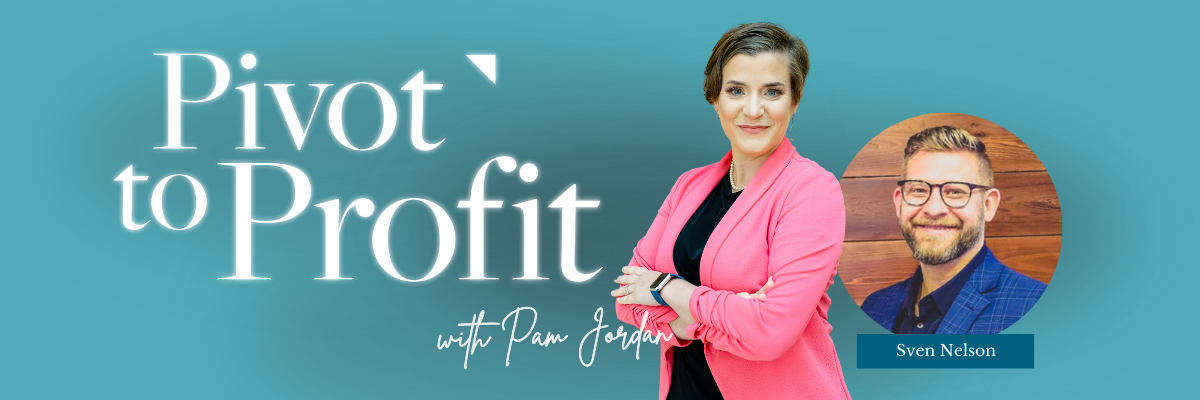
Cash flow is the lifeblood of every business—and when it breaks down, even profitable companies can find themselves in trouble. On a recent episode of Pivot to Profit, host Pam Jordan sat down with Sven Nelson and Logan Nelson of Ivy Business Capital to unpack the often-misunderstood world of business financing, accounts receivable, and responsible access to capital.
Sven Nelson is a seasoned entrepreneur and capital access expert with more than 20 years in commercial collections. As the owner of C2C Resources, he has helped businesses recover hundreds of millions of dollars in unpaid invoices, earning a reputation as “the guy that gets you paid.” After witnessing how many strong companies ended up in collections simply due to cash-flow gaps, Sven partnered with his son Logan to launch Ivy Business Capital—focused on helping business owners secure responsible funding before desperation sets in.
During the conversation, Sven emphasized that credit problems often begin long before money is overdue. Strong credit policies, clear contracts, and proper client onboarding are critical. Many business owners don’t realize they are extending credit without formal agreements, which leaves them vulnerable if payments stop. The longer receivables remain unpaid, the harder they are to collect—bad debt statistically loses value every month it goes unpaid.
The discussion then turned to financing options. Logan explained that while banks are often the first place business owners look, many don’t qualify or are limited to a single lender’s criteria. Others turn to high-cost merchant cash advances, which can severely strain cash flow due to short terms, frequent payments, and high payback amounts.
Ivy Business Capital takes a different approach. Rather than pushing one product, they evaluate a business holistically using soft credit checks and offer multiple options, including SBA loans, term loans, lines of credit, equipment financing, invoice factoring, and even 0% interest credit card strategies. Loan amounts can range from $5,000 to over $10 million, depending on the business’s stage, credit profile, and goals.
A key takeaway from the episode was that the “best” financing option isn’t always the one with the lowest interest rate. Term length, payment structure, and overall cash-flow impact often matter more. As Pam Jordan reinforced, understanding the true cost of capital—and planning ahead—can prevent costly financial mistakes.
Ultimately, the episode highlighted one clear message: smart business owners build relationships with funding partners before they need the money. Responsible capital, used strategically, can protect cash flow, fuel growth, and keep entrepreneurs out of crisis mode.
EPISODE TRANSCRIPT
Pam Jordan (00:01.381)
Hello everyone, welcome today to Pivot to Profit. I have some amazing guests who are here to talk about the mysterious thing called business financing and AR and all of that because as entrepreneurs, cashflow is king or queen and so it is so important to have a good partner for that. Welcome Sven and Logan, how are you guys?
Sven Nelson (00:23.749)
Fantastic, thanks for having us on, Pam.
Logan Nelson (00:24.622)
awesome.
Pam Jordan (00:26.603)
Awesome, so let me introduce you and just for context, and Logan are a father-son duo, but Sven is a seasoned entrepreneur and capital access expert with over 20 years of experience helping business owners get paid and grow. He is the owner of C2C Resources, a B2B collections firm that has recovered more than $500 million in commercial debt, earning him the reputation of the guy that gets you paid.
After seeing firsthand how many strong businesses struggle to access reasonable funding, Sven went out to find Ivy Business Capital with his amazing son, Logan, where they help underfunded business owners secure working capital to grow their growing businesses. Amazing, you guys. So excited to have you. You're one of the partners that we work with with our business owners, because you have so many options.
But before we dive into the nitty gritty, I always wanna ask, Sven, what did you wanna be when you
Sven Nelson (01:32.667)
That's so funny. I went to school to be a chef actually. Studied culinary arts, competed all around the country, but at some point I realized that it was hard to raise a family being in the restaurant industry. So my journey through entrepreneurship began.
Pam Jordan (01:50.053)
I love it. And Logan, with an entrepreneur dad, what did you want to be when you grew up?
Logan Nelson (01:56.022)
Yeah, so ever since I saw him doing, you know, entrepreneur stuff like real estate, fixing and flipping houses and stuff like that, I wanted to do that originally with him and get into the real estate. And then by the time I was graduating high school and ready to get started on that, he was like, well, I'm actually gonna start this funding business. So let me tell you a little bit about that. And that's where I ended up and I like it a lot. So it's a good time.
Pam Jordan (02:20.385)
I love it, I love it. So Sven, let's talk the early days of C2C resources. So how did that get started? where did you get, at what point did you get to like a financial success with that, that you're like, this is gonna work?
Sven Nelson (02:36.507)
Yeah, so I mean, I actually started out as an employee of CDC Resources in my late 20s. I was 27 years old when I started there. I started at the bottom of the company and worked my way up as the top rep in the business and then eventually became partner. now the second largest shareholder in the company. We've helped tens of thousands of businesses collect bad debt, both domestically and internationally. I know the interest at 500 million in bad debt. I probably need to update that.
closer to three quarters of a billion in bad debt now that we've collected. you know, I've always had a side hustle, you know, like Logan mentioned earlier, real estate, you know, and then, you know, obviously different other ventures that I've tried. But, you know, I love collections. I love AR. I love commercial credit, trade credit, all of the things that come along with that. So it was just a real easy for me to move on into the business funding world because
I just saw so many business owners that were ending up in collections that I felt if they had some options for funding and some education around that, maybe they wouldn't end up in collections. And as my friend that I had lunch with the other day said, you know, I have the dark side of collections and the light side.
Pam Jordan (03:53.605)
Yeah. Yeah. You help on both sides. So let's start on, I don't know which side you're calling the dark or the light side, but as business owners, collecting money from clients can be challenging. So what are some words of wisdom that you have for us? So as business owners, when we have clients that we can't get that money from, what's some tips and tricks that we can do?
Sven Nelson (04:19.867)
Yeah, first and foremost, mean, credit starts at onboarding, right? I mean, with a proper credit policy procedures that you set up ahead of time, you know, proper vetting of the customer, whether that be through a credit application, trade references, all of those things. So many business owners find themselves extending credit and they don't even realize it. And then before you know it, they don't have credit applications. They don't have an agreement. And then they get in trouble, right? And they have to go try to pursue this through a third party.
or, know, God forbid you have to go to suit and then you don't have a contract or an agreement and you really have no language to stand on. So you have to set yourself up for success to begin with. And that's what I coach people to do. I teach them how to set up a credit policy. I guide them on those policies and try to help steer them in the right direction and mitigate risk. So it's all about mitigating risk, taking calculated risk and just managing the credit accordingly. A lot of people wait too long to actually do
something. mean these trade credit balances that are aged they're not like fine wine or cheese they don't get better with age right. So the longer you hold on to them the further away you are going to be from getting your money. Bad debt actually ages about six and half to seven percent per month statistically speaking. So by the time a year rolls around you got less than a 22 percent chance of collecting on a bad debt. So most people typically exhaust all of their internal efforts within 90 to 120 days.
And as long as you're holding on to it after that, you're really just duplicating your efforts, right? And so, you know, doing the same thing over and over again, expecting different results is just insanity. So we try to train people not to do that, try to get them to turn these things over after they've exhausted those efforts. But really having that credit policy in the beginning is going to set the tone for what's going to happen. So.
Pam Jordan (06:12.087)
It's the good old, it's not in writing, it never happened. So if you don't have that agreement upfront, those terms signed really clear, if things go sideways, you have nothing to argue against.
Sven Nelson (06:23.931)
Absolutely. Yeah, yeah. mean, the judge can throw it out if you don't have a signed agreement.
Pam Jordan (06:28.963)
And so then as you're in the collection side of things, you realize these are really good entrepreneurs, well-meaning people that just got in a tight spot because they didn't have cash for various reasons. There's lots of reasons why people run out of cash. And often from what I see, they run out of cash not because they don't have work, but because they're not managing their numbers and not managing their cashflow. And so that's where the funding side comes in.
Sven Nelson (06:49.957)
Correct.
Sven Nelson (06:55.929)
Yeah, yeah. So I just felt there was an opportunity there to help people out and just develop this marketplace along with Logan. He's been super excited about it and very like, I don't know, it's just been great working with my kid. It's always been a dream of mine to work with my children and he's blown me away with his enthusiasm and his work ethic and his ambition. So I'm just proud to have him as my son and my business
partner.
Pam Jordan (07:27.439)
I love it. So when it comes to Ivy Business Capital, which is the funding side of things.
Sven Nelson (07:32.645)
Correct.
Pam Jordan (07:34.713)
It's not like you have one option. So if a client comes to you and needs funding, what type of options do you have available for them?
Sven Nelson (07:44.569)
Yeah, Logan, why don't you take this one?
Logan Nelson (07:47.34)
Yeah, so I mean most people they think about funding for their business. The first thing that comes to mind obviously is probably a bank and most people either can't qualify for a bank or
just restricted to one credit box, meaning they're only looked at by one lender or they're just flat out denied for what exactly they're looking for. So they might be looking for more cash than they qualify for. And a lot of times these people turn to these online lenders, the merchant cash advance lenders that it's not even really a loan, it's an advance on your future receivables. And it's really, really tough for most business owners, especially on their cashflow, because the term of these loans are no longer than 10 months in most
cases. And on top of that, instead of a monthly payback like any other normal type of financing, it's on a daily or weekly basis. So it's a super high frequency and a shorter term. So your payments are way bigger. And on top of that, you're paying back 30 to 50 % of the money. So it can be really, really challenging. So what we do is we actually bring business owners into our system using a soft credit pool. So instead of using a hard credit pool like the bank where they hurt your credit just to check your options,
We're just looking at what's available to them since we're not trying to fit them into one specific loan product. We're able to do that. And then what we do is we search banks, alternative lenders, and creative financing opportunities across the whole country to see what options the business owner has and then consult with that business owner on what exactly they're looking to do so we can figure out what's the best actually route for them to take to get to their goal.
Sven Nelson (09:23.791)
So we'll have equipment financing, we'll have SBA loans, we'll have term loans, lines of credit, invoice factoring, PO financing.
Pam Jordan (09:24.133)
Awesome.
Sven Nelson (09:34.811)
0 % interest credit card stacking, startup funding. we just have a wide range of options. we're going to interview the client, see what their goals are, and then try to bring them the best options that we know of and see what's going to work best for them and let them make the decision.
Pam Jordan (09:56.317)
And I love it that you give them options so that they can decide what makes the most sense for them in the short and the long term. When we're talking about funding, what size loans are we talking about? Is it 10,000, 100,000, a million? Like, what's the range that you guys can help with?
Sven Nelson (10:12.515)
Yeah, so we could do loans from $5,000 to $10 million plus, but I mean really our sweet spot is probably, you know, million and under. I mean, we can do the larger loans, no problem. It's just not a lot of people qualify for them or have the right stuff in place to do it, right? So, but yeah, with $5,000 to $10 million plus.
Pam Jordan (10:30.725)
Okay, all right, so that leads right into the next question. As funding experts, what are financial institutes looking for? Like, what are they looking at when they look at a founder, an entrepreneur that's wanting to save $250,000? What do they care about?
Sven Nelson (10:47.609)
Yeah, Logan, don't you take this one?
Logan Nelson (10:50.062)
Yeah, so I mean it all depends on what the business, what stage the business is in. If it's an existing business, they're gonna wanna see that you're doing similar revenue to qualify for that loan. So it means the cash flow on your last year's tax return has to show that you profited enough, that profit number has to be enough to fit your payments for that $250,000 loan. Now, if it's for a startup SBA loan, for example, someone's just now getting into the business, they need $250,000 to,
open a big gym or something like that. They're going to want to see that you have the collateral. So a lot of times it's a personal real estate property. And on top of that, they're going to want to see that you have 10 % at least probably to put down for the loan. you know, that shows that you're committed and that you're invested just like the bank is and that makes them more comfortable. But on top of that, they're going to be wanting to look at, you know, your personal credit. A lot of times people just think it's business credit, but especially when you're just starting personal
credit is really the foundation of what makes you look trustworthy to a lender. And even when you're an existing business a lot of these business owners don't know that the business score the SBA or most conventional line of credit lenders or term loan lenders are looking at is actually called the SPSS score. It's the Small Business Scoring Service I think is what it's called is what it stands for. And it's highly highly reliant on your personal credit and your business credit combined. So these business owners I mean these lenders typically
view these businesses as they're going to borrow the same way that the owner borrows. And so if the owner borrows good and the business borrows good, then this is someone we want to work with and extend credit to.
Sven Nelson (12:31.429)
Yeah, and to,
go a little deeper on that. It really depends on the type of loan that we're looking for, right? Like, I mean, if we're going to get an equipment loan, right, we might just need, you know, six months bank statements or four months bank statements and a PO or an invoice for the piece of equipment, right? So that's really easy. If we're doing, you know, a term loan or a line of credit through a conventional source, then they're going to want to see more documentation like an SBA or something like that. And SBA obviously by far is the most
difficult loans to qualify for, but they're also usually the best, longest terms that are offered for many of these businesses. But I mean, something like a credit card stack is just, you know, like we're just doing that off their personal credit report, right? So it really comes down to what type of loan are they looking for? What's their goal? And then each loan has its own documentation and things that we have to ask for based on that.
Pam Jordan (13:30.309)
Okay, when people come to you for funding, you mentioned equipment, but do other people come to you for like operating capital, for acquisition? Like what are common things that business owners come to you and say, I need money for X.
Sven Nelson (13:45.019)
Yeah, that's a great question. a lot of times they're always working capital, right? They're always like, we need working capital. So we kind of have to dive deeper into that and then kind of like, what does that actually mean to you, right? What are you going to use this working capital for? So, you know, are you going to buy a building? Oh, you're going to buy a building. OK, well, then we know we can go and get a real estate back loan or.
or something like that, right? Or if somebody wants a line of credit, what are you going to use a line of credit for? Well, they may say that they want a line of credit and then they're going to go purchase a piece of capital equipment with it. We're like, no, you don't want a line of credit for that because that's not the right product. So we try to guide people in the right direction. But yeah, people are coming for working capital, equipment, real estate, to purchase a business, all sorts of different reasons people come to us for loans.
Pam Jordan (14:33.155)
you. And so I'm sure interest rates are all over the place. So what do you got? And there's lots going on with the Fed and all of that. So how, kind of rates are you dealing with? You know, are they, I've seen as high as 98 % before, like, and I assume that's not what you guys have. So help us understand what interest rates you guys have in your Rolodex of skill of lending partners.
Sven Nelson (14:38.34)
Yes.
Sven Nelson (14:50.404)
Ha ha ha!
Logan Nelson (14:50.477)
Yeah.
Sven Nelson (15:00.611)
Yeah, again, it really just depends on the product. So, I mean, we have zero percentage credit card stacking that we do for, you know, low to new revenue or startup businesses. And then we have, you know, term loans and lines of credit that can, you know, range at various rates. You know, I mean, some of these things can get up there, obviously, based on, you know, the credit profile of the customer. So we really don't I mean, it's not it's just a wide range of
rates I guess is the best answer and they're kind of all over the board based on the client's credit. Logan I don't know if you want to expound on that a little more or not but.
Logan Nelson (15:39.201)
Yeah, yeah. So obviously we have the one zero percent interest product. Everybody hears that they want that first or they want to look at it first at least. And they can really range like he said. But one thing most business owners especially smaller business owners don't think about as much is that the interest rate is important but it might not be the most important factor to them. And what I mean by that is a lot of times it actually comes down to the term length of the loan because what they think is you know the lower their interest rate the lower the monthly payment. Well that's not always necessarily
For example, the 0 % interest product, it's great because you're not paying any interest on anything you borrow, but your payments are going to be high because it's a 12 to 18 month payback product. If you don't pay it back in that 12 to 18 month period, you're going to have the interest rate start building up after that. So it really, really comes down to what the business owner's goal is. Are they trying to lower their monthly payment? Are they trying to, you know, if they can afford a really high payment, are they just trying to pay the lowest interest overall?
there we help figure out what the best path to take is for that client. Because they might qualify for multiple different things and think that they want the lower interest rate product but then when we consult with them they really want the longer term.
Sven Nelson (16:50.587)
Yeah, it's not always about the overall cost of the loan. A lot of times it comes down to cash flow, right? mean, obviously the overall cost of the money is super important and you need to make sure that that makes sense to you and to your business. But it really, with a lot of these businesses, you know, like they're so cash strapped, they're just trying to manage cash flow, right? More than anything. And so a lot of times it really comes down to that. You how can they get something that they can afford that allows them to accomplish their goals
without strapping their cash even further, but it's not absurd as far as an overall cost of the loan.
Pam Jordan (17:27.119)
Yeah.
Logan Nelson (17:27.566)
One more thing even to add on that is a lot of business owners will see this interest rate and see like, for example, like a 10 % interest rate on a personal term loan. Well, they're going to be paying 10 % for five years. Typically it's a five year term is what it usually is compared to like an MCA. If they borrowed that same amount of money on an MCA, they're going to be paying 30 to 50 % of their money. So it might sound like less at first, but what they don't realize is that with those personal term loans, a lot of times they're no prepayment penalty after that first year. So if they
only need it for the first year or two years, a lot of times it is cheaper than the MCA because they can pay it off without actually having to pay that full interest what they're originally quoted and expecting.
Pam Jordan (18:10.565)
It just comes down to the numbers. And I think far too often business owners don't take the time to see the full scope of what that funding option costs. Pre-payment penalties are huge. The service fees, the interest rate and the term, all of that needs to be considered because to your point, Logan, one thing might look really flashy, but when you amortize it out, you're like, holy crap, that's going to cost me so much more.
Sven Nelson (18:39.451)
Yeah, absolutely, yeah. And not to mention like all the headaches and pain you're gonna go through when you can't keep up with the pain.
Logan Nelson (18:39.564)
Yeah.
Pam Jordan (18:47.053)
Yeah, we have clients that get into the not great funding situations sometimes. And I'm like, well, that's an expensive tuition to how to not get funding and have bank have money withdrawn from your account every week. And you can't make payroll because you have this awful debt. And so then we just increase profitability and created debt avalanche to get all this debt paid down as quickly as possible.
so that they can free up. It's like, go get a line of credit or a home loaner, like a HELOC, right? Pay off these crazy debts and then you can pay yourself back over time. There's so many options because unfortunately, and I'm sure you see this too, is people come to us too late. They have already made those desperate funding decisions because
Sven Nelson (19:35.483)
bad decisions. Yeah.
Pam Jordan (19:41.731)
Within five minutes, you can fill out an online application and someone will wire you 15 grand, but at what cost?
Sven Nelson (19:49.017)
That's the thing. mean, people don't.
I think they get caught up in their emotions, right? They're like, I got to resolve this right now, right now. And then like, you know, like when, once you get on that emotional roller coaster, it's hard for you to think logically. Right. And so like, I've seen this happen before it's happened to me. It's happened to everybody, I'm sure. Right. Like you get in this emotional roller coaster and then, you know, logic goes out the window. so we coach people like, you know, like get money before you need it. Right. So that it's there so that you have a safety net. a lot of times people come to us and it's just.
It's far too late for us to even help them. But had they come to us, you know, just a month or two earlier, right? And one less bad, like late payment, one less hard inquiry, you know, that's the worst thing is like, man, if you just have, know, just one less hard inquiry or one less, you know, this or that, and then you can't help them, it really stinks. So, I mean, we have to work through those issues with these people. Maybe we have to send them to credit repair. Maybe we have to do, you know, one thing or
or the other or help them wait it out. But I always tell people like, you know, if you're if you're at all wanting to grow your business and everybody does want to grow their business, you should be you should be, you know, meeting with a funding consultant on a regular basis that, you know, can kind of talk through your plans for the year. And, you know, you guys can talk through what what are you looking to accomplish this year? What are the things that your big capital expenditures that you're going to you're purchasing? You know, what are the costs this year that you see rising? And then are you prepared for that? What's going to
to what is what is you know gonna have to be true for X to happen right so it's important to develop a relationship with somebody like us early on and and and keep it constant right like Ivy is the old Norse word for lifetime obviously my name is Sven Norwegian heritage proud of that Ivy is the old North Norse word for lifetime so we want to be lifetime capital partners for our clients and work through these scenarios and situations with them before they happen before they come up so that they're
Pam Jordan (21:26.244)
Yeah.
Sven Nelson (21:51.805)
ready and they have the capital they need to expand their business and know, fund their dreams, right?
Pam Jordan (21:59.799)
Yeah, when we work with clients, we always tell them people will give you money when you don't need it. It's much harder to get money when you do. So if you're in a strong situation in your business, that's a good time to have a conversation with a funding partner to figure out how can I have access to capital when and if I need it. Because in six months when you can't make payroll, that's when you make those desperate decisions.
Sven Nelson (22:25.339)
100%. Yeah, you have to have that safety net ready and there before you need it. And that's where most people go wrong. That's where they end up with the bad loan or the bad situation. it's sad to see, but we want to try to help people avoid that for sure. And I want to mention too, it's like, you need to make sure you have the right funding partner because so many of these people out there, these alternative lenders and funding consultants that are doing the MCAs and the revenue-based financing,
Look, I mean, there's there's a time and a place for those for certain businesses. They work. Most people they don't work for. Right. But you have to have a funding partner and a consultant that actually cares about you and your situation. And are they going to be there after the fact? Right. So like I always tell Logan, like and all of our clients, we're always talking about, hey, we want this person or this business to be in a better position when they leave us than they were when they met us. Right. We don't want to set them up for failure.
I I like to be able to sleep at night, right? Like I want to feel good when I go home and put my head down on the pillow. So I want to make sure that I'm doing everything that I can to put that customer in the right position. And I'm not helping them get overextended. And I'm not putting them in a bad way, right? So it's all about them. It's not about us. But you need to have a consultant that thinks that way and is going to be there for the long haul.
Pam Jordan (23:49.081)
Yeah, absolutely. hear it. Do you have a success story that you can share with us?
Sven Nelson (23:53.892)
Sure, we've got a lot of them. Let's see, we recently did an SBA loan for a guy. And I think that had he gone to a normal bank, and I want to mention like a lot of banks, they don't even share with their lending originators, like what their underwriting is, right? So they don't even know, they're just asking for documents. So this is what the underwriter needs, but they don't know why they need them or what they're looking for. And had this guy gone to a bank, the first round and tried to get this
SBA loan, he probably would have been denied. And the reason for that is because he had the money on his tax returns he was showing, but his current P &L didn't show the same type of revenue. So, but we had a conversation with him and he said, hey, look, I've got some projects that are coming up. And as soon as those come in, I can put them on the P &L and then things will be right where they're supposed to be. Right. And so had we not had that conversation with him and kind of educated him about that and consulted him, he wouldn't have gotten that loan.
Right. He would have just gone to the bank got denied and then you know He would have been screwed and probably gotten a bad loan, right or nothing at all So we were able to consult with him telling you know, this is what you need to do. Wait, wait this out Let's let's make sure the timing's right and then actually get him the the funding for that SBA and by the way We did that during the government shutdown like the whole process was Nerve-racking to say the least because he really wanted this money and we're like, dude, we can't do anything the banks SBA shut down right now
Pam Jordan (25:24.099)
Yeah, no one's answering the phone, man. Can't help you.
Sven Nelson (25:27.439)
Yeah, so there's another story we share a lot with people. And this is just this happens to a lot of clients where we have a business owner that maybe a newer business that's running their business on their own personal credit cards. And then they come to us and they can't quite qualify for conventional financing or an SBA loan. Maybe they don't have two years tax returns, whatever. And this client in particular I'm thinking of right now,
great credit, but they had some outstanding receivables that they knew were coming in. They were great clients. They were just stretching them out 90, 120 days. So they had a cash flow issue, right? So first thing we did is we refinanced their high interest credit card debt and personal term loans, restructured that debt, you know, stretched it out over period of time, gave them a structured payment and payback, obviously to lower interest rates. And then once that happened, we shot their scores up because they took all that revolving debt and put it on term loans, right?
So their score shot up then we were able to go and do the credit card stacking for them and get them some actual working capital that they could bridge the gaps in their cash flow while waiting for those receivables to come in They ended up with over $200,000 in between all that and were able to write really restructure their business and Now they're on a path and then hopefully they'll come back to us and we'll do you know an SBA loan here after they get their tax returns done and and then we can get them in a really good position to get you know regular bank line of credit or something else
So
Pam Jordan (26:58.853)
I love it and that cash flow it matters and if you don't know your numbers and you don't have a P &L and you're not reconciling and you don't have up-to-date tax returns It's all gonna be relying on your credit score and most likely if you don't have your numbers in order your credit score is not where it needs to be either so it's so Imperative to have your financial house in order
Sven Nelson (27:20.379)
100%. And you know, some of what we do is certainly stuff that people could do on their own. They just can't do it at the capacity that we do it or in the right way. And what I mean by that is like, people can go out and get personal term loans, right? But we know what the lenders are looking for and how to get them approved, right? So we know to get the right loan for the right thing, right? Same with zero percentage credit cards. Sure, you can go out and get a couple of those, but you're not going to maximize the amount that you're getting because we go through
we look at your credit report, we know which cards to take you to, we know where you're gonna get the best amount, we know how to maximize the value in what you're looking to accomplish. I mean, that's the thing about us being consultants is we're trying to maximize the money for the client, right? We're trying to get them the most they can actually get so that they can actually accomplish their goals.
Logan Nelson (28:15.532)
And one more important thing to add on to that is that for each of these products, there's probably anywhere from a dozen to hundreds of lenders that are looking for different things. And we help them find the clients for what they're looking for. So we match them up to the right lender on top of what the lender is looking for.
Pam Jordan (28:35.621)
Awesome, awesome. So what is on the horizon for you guys? What are you guys working on? What's next?
Sven Nelson (28:41.189)
You know, like for us, know, referral partnerships, that we're just building referral partnerships. We really just enjoy helping people. Eventually, we have a dream of, you know, having our own fund and creating a product that competes with the SBA as far as like the term length. And we have a specific way. I can't quite share all the secrets yet, but we have a specific way in which we're going to build this fund and nobody's out there doing it in the way that we're going to be doing it eventually.
So we're super excited about that. mean, that's way, way, way in the distance, but you know, got to have something to dream about, right? So we right now, we just want to help as many business owners as we can get access to the capital. And we call it getting access to responsible capital, right? So I think that that's the key word is responsible because we all need to be responsible to our checkbooks, our businesses, our employees, right? Like when you're a business owner, you have mouths to feed, right? And if you
make a bad decision or a bad mistake, not only does it change your life and the business, but it changes the lives of your employees. So those bad decisions have an impact not only on just you, but everybody around you. So we want to make sure we're making responsible decisions when it comes to funding, not only for us, for our clients and for their employees, right?
Pam Jordan (30:00.677)
I love it. I love it. So gentlemen, where can people connect with you if they want to follow up?
Sven Nelson (30:06.917)
Great. So our website is www.ivybusinesscapital.com. So it's A-E-V-I, businesscapital.com. Again, Ivy is the old Norse word for lifetime.
And you know, you can certainly reach us on our website. You can do the Apply Now. And it's a pre-qual, which is a soft pull. It doesn't hurt your credit. And we can come back and get a lot of options for you and see what you qualify for.
Pam Jordan (30:37.861)
Amazing, amazing. Thank you so much for sharing your story with us and all your wisdom. Entrepreneurs out there, if you need help getting clarity on your financials, improving your profitability and reducing your taxes, just go to pamjordan.com to book a call with my team. And remember that it's not what you make that matters, it's what you keep. Thanks everyone.
Sven Nelson (30:56.389)
Hey, thank you so much for having us on, Pam. We really, really appreciate it. It was awesome and a great, great time. Thank you.
Logan Nelson (30:56.738)
to keep it.
Pam Jordan (31:01.903)
Thanks guys.