Noah Landow on Scaling IT Without the Chaos
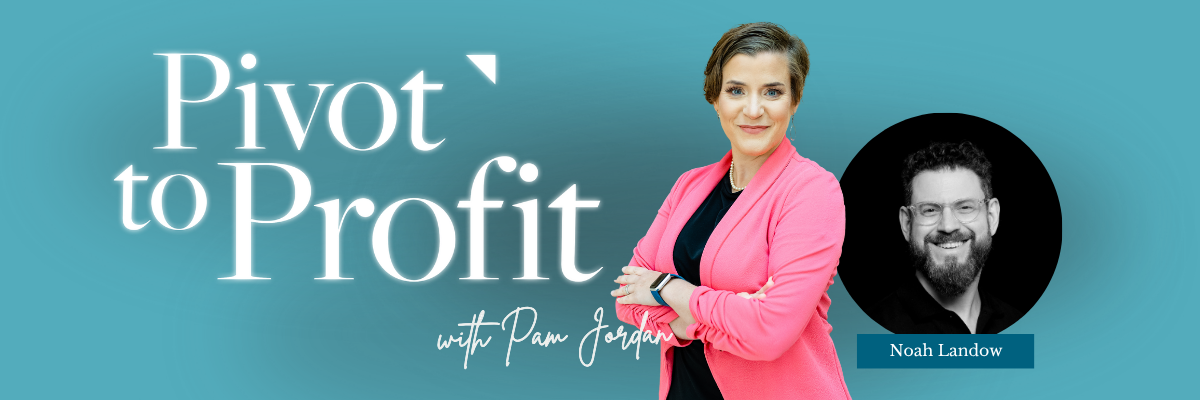
On Pivot to Profit, Pam Jordan interviews Noah Landow, founder and CEO of Macktez, an IT consulting firm bridging technology consulting and managed service provider (MSP) services. Landow’s path—from Yale architecture to 25+ years leading Macktez—highlights a core theme for growth-minded founders: pair creativity with disciplined systems.
Macktez is often tapped when scaling companies face tech debt, security gaps, or identity sprawl. Instead of rigid, one-size MSP plans, Landow favors co-managed IT relationships that flex with complexity, compliance needs, and team capacity. His trigger for bringing in help isn’t just headcount; it’s when leadership hears “Azure AD” or “JumpCloud” in the boardroom—or when nobody has time to “own” IT.
Three low-lift moves any small team can implement now:
Use a password manager for shared, encrypted credentials.
Enable MFA across Google Workspace or Microsoft 365.
Keep domain ownership business-controlled and protected.
Financially, Landow watches billings, near-term pipeline, and workload, and leans on automation/AI to reduce toil while preserving quality. His forthcoming book, Tame the Tech Beast, gives CEOs, COOs, and CFOs a pragmatic roadmap for internal IT—what to do now and what to budget for later.
EPISODE TRANSCRIPT
0:00
Welcome to the Pivot to Profit podcast, where we believe that understanding your numbers is the key to freedom of time and money.
Because at the end of the day, it's really not about what you make, it's about what you keep.
So each week, we're going to bring you real stories from real entrepreneurs who have faced the challenges of growing a business.
0:22
We'll also dive into how numbers have helped and sometimes hurt them, and gaining clarity over their finances has unlocked new levels of profit and freedom.
Hello and welcome to today's episode of Pivot to Profit.
We have the amazing Noah Landau here.
0:39
He has extensive IT knowledge, cybersecurity, but this is going to be a fun conversation.
We're going to learn all about his journey.
Noah, how are you?
I am good.
It is a beautiful day in the autumn.
Today I'm just I'm loving the weather, so doing very well.
And Noah is chilling in New York City, like New York, NY proper.
0:57
So super jealous.
I love the city.
So let me officially introduce you.
Noah is the founder and CEO of Mac Tez, an IT consulting firm that has partnered with innovative organizations to solve complex technology challenges for more than 25 years.
1:12
Noah also serves as board President of Union Docs, a Center for documentary art, and sits on the board for the Victorian Web, a pioneering digital resource for Victorian art and culture.
He's a long time advocate for creative communities and education, with a career that bridges technology, design, and cultural engagement.
1:31
Noah divides his time between Providence and New York City, continuing to bring thoughtful insight and creativity to everything he does.
Amazing, Noah, I'm so excited.
We've watched other conversations that you had, so I'm just going to dive right down here.
Are you ready?
Absolutely.
What did Noah want to be when he grew up?
1:47
Well, depending on what age, I definitely wanted to be a fireman for a very long time.
There was a long period there where I decided I drove around in a little tiny fire truck and then I switched at some point to wanting to be a knight.
And I have memories of the thanks at the Halloween, probably in middle school, where I decided I was going to be a vampire night.
2:04
So good indication that these desires change as you grow and you know, being being aware of the ever evolved complexities of the world affect your ambitions for the future.
Well, I'm sorry to hear you did not turn into a vampire night when you grew.
I'm happier, I think, with life than I would be if I was a vampire knight, so thank goodness.
2:20
So what was little Noah, who wanted to be a firefighter and a vampire knight, taught about money?
What was family taught?
Society.
School.
Money good, money bad.
Should you have it?
Should you not?
All of those things.
My parents were academics and interestingly, I mentioned at one point that the company that I run, Mac Tez, was is my mother's maiden name.
2:38
Part of the story behind that is my father's side was more academic, his father was a doctor and my mother's side, her father and brother had started a company named after their grandfather.
And so as children, it felt a little bit like the sort of business side was on my mother's side and the academic was on my father's.
2:55
That wasn't quite black and white 'cause my mother was also an academic.
As a child, I felt like we had modest means.
Academia certainly didn't equip us with wild, sort of decadent lives.
Did certainly grow up comfortable and in Providence, RI, a wonderful town to grow up in.
And over the years I think I've been fortunate enough to not have sort of a shortage of money being a driving challenge in my life.
3:14
I've been very lucky and I think luck is an important thing to in that some of its families, some of its circumstances, some of it's just the dumb luck of buying a bunch of Apple stock a long time ago, back when it was very cheap and holding on to it for a very long time.
So that did make a huge difference.
And frankly, it's a substantial portion of My Portfolio now.
And so, yeah, as a child, I think sort of finance and business and all those were things that were kind of like a little bit secondary.
3:34
I was most drawn to and excited about these ideas of creative and explorations and design.
My aspiration in college was to become an architect, which I did pivot out of relatively quickly.
But I think in a lot of ways that love of like what are the practical, but over time, I think one of the great journeys of Mac Tez has been kind of realizing early on that I needed to learn how to balance books.
3:53
I needed to learn basic operational things.
I needed to run a board meeting.
So there are sort of evolving necessities of sort of learning and knowledge to gain as you progress.
Somebody once told me recently in the last 10 years that of the primary job of a CEO, particularly an organization that's trying to grow is to basically learn something new and then hand it off to somebody else continuously.
4:11
I don't think I'd do that perfectly certainly aspire to that.
And I try to maintain that as sort of A, at least in broad odd strokes, a part of my job.
I love it.
So let's talk early career.
You did go to Yale for architecture, and then now that's not at all where you're at.
So what was the driving force of that?
4:27
Like where were you?
Like yes, this is what I want.
The pre driving force to even before that is before I went to college I did a bunch of arts and creative projects.
I actually worked as a silversmithing counselor at an amazing summer camp called Bucks Rock that is part of my resume.
I ran out or was part of a non profit for about 25 years that did essentially scholarships to the camp.
4:45
The camp has now become a nonprofit in a wonderful journey of its own.
And I'm still tangentially involved there.
But those early days as a silversmith for for about 10 years, culminating in the summer camp were sort of by pre college years.
And then architecture, I think as a as a field was something I was drawn to.
I did a lot of theatre, a lot of theatrical design and a lot of sort of like trying to shape the human environment.
5:05
And so architecture for me was an opportunity to kind of learn about volume and space and construction and materiality and lighting and sound.
Architecture as a career and architecture as an education and are very, very different.
I actually had a tech talk in our office just a few weeks ago specifically on this called after architecture, in which everybody in the room was somebody who had done an architecture undergraduate or graduate or some sort of degree and then did something else as their job.
5:29
So it was 20 people filling the room specifically on this topic.
But I think architecture is an amazing educational sort of experience, but it's very different as a profession.
As a profession, it is much more constrained by regulation and by contracts and by construction schedules.
And I did not find that anywhere near as exciting.
5:45
So after, after a couple of interns, I kind of veered off in a different direction.
I started working for a graphic designer.
And then a funny experience working as a graphic designer for a German design firm called Meta Design in San Francisco in the mid 1990s resulted in me switching gears.
And instead of doing design work for Hewlett Packard, which is what I'd spent a couple of months doing, I was like, I'd much rather prefer, I'd much rather have my clients be the creatives and do the technical work.
6:10
It meant that I spend all of my time sort of working with designers as opposed to all of my time working with Hewlett Packard engineers.
So kind of like jump to the other side of the fence there a little bit and then and one thing led to another.
I love it.
So when one thing led to another and you were like, I'm going to start my own business, did you have in your mind that I'm going to be an entrepreneur?
6:28
Like I just want to be my own boss.
What was the motivation there for you?
That's a great question.
I actually started as a favor.
One of my thesis advisors in undergraduate architecture was a partner in a design firm, a great design firm called 212 Associates that was based in lower Manhattan.
And I had thought I was going to do design work for them and ended up in a sort of like weird series of coincidences that they had a member of the team who had bought a bunch of server physical stuff and had like never gotten around to setting it up.
6:53
This sort of thesis advisor of mine was like, hey, would you mind basically doing us a favor for a couple months and like taking on this project?
And I was like, I don't actually know that I'm the right person for that, but if you'll pay me, I'll do it.
And I did And I turned out I was OK at it.
And also probably equally importantly, I identified other people who I could bring in for help, including my current business partner now, and over the years have found some wonderful people to collaborate with.
7:14
So the long arc of that was I sort of almost fell accidentally into technology in New York City, thinking I was only doing it for a few months.
And then one thing led to another, of course.
And so I didn't intend to start off as an entrepreneur, although I did in my very early days of Mac Tez, remember talking to a friend and saying, OK, so the one thing I don't want to be as bored and I don't want to be doing the same thing over and over again.
7:35
So I think what I want to do is like pick some new area to explore for the business like every six months or every 18 months.
And so the first year it was like what's an LLC and what's an S Corp and what's taxes?
And if I spent a bunch of time learning some very basic things.
And then over the years, that window has shifted, obviously after 29 years, which is what we're up to now, crazily, that is a very different set of topics that I focus on than I did 27 years ago.
7:58
You stumbled into entrepreneurship as a favor to help somebody, and then all of a sudden, now we have a business.
So in those early years, I'm sure there was, you know, good times and bad times.
But tell me about one of the bigger financial wins that you remember where you were like, hey, wait, I can do this and like, maybe pay bills and still, like, enjoy what I'm doing.
8:17
What was one of those early financial wins for you?
I think one of the early moments, probably in the 1st decade was realizing that we had reached a point where we needed to hire a staff person.
The early years were kind of a collective of three to five kind of freelance consultants who were all collaborating on projects.
8:34
And we reached a point where it occurred to myself and a few others that it would really make a big difference if we had somebody sitting at a desk who was actually like answering the phone and like able to accept deliveries and to sort of coordinate.
And I think that was a convoluted process.
I think we, you know, looking back, I would have handled that differently now than I handled it then.
8:51
But we hired somebody who worked out fine for a while and it was a very interesting kind of moment.
It felt like, oh, we suddenly have an employee.
And then of course that creates a significant number of ramifications as a business in terms of like, you need to put them somewhere and you need to understand how payroll and all that other stuff works.
So that was a 10 year process of education and exploration for sure.
9:10
OK, I love it.
Yeah, growing a team is a new stage in scaling.
Because if it's just you and some contractors or some buddies making things happen, once you admit that there's enough going on that I can't do it by myself and I help, it really makes you feel that, oh, this is a business now, Like I'm not playing.
9:26
So it makes total sense that that first hire was like, this is real, this is how we're going to go.
I think it's also fascinating now quarter century later, because the line of what kind of work we would hire a full time person to do versus hire a company to do, particularly an outsourced company or a SAS offering is very, very different.
9:45
Obviously the role of AI is a factor here, but also international factors, telecommunications, there's like so many variables now that are quite different from 25 years ago.
In some ways, it's I don't know that we would have hired a person if I was encountering the problems we encountered then.
Today, I don't think hiring a staff person would have been the way I solved the problem.
10:02
And I think that's interesting.
It's sort of like as the landscape has shifted over those years, the kinds of tools available to solve problems have also changed dramatically.
Because the reach and access to talented team members, they don't have to be W twos coming into an office in New York.
They could be sitting in Central America, Europe, wherever.
10:19
I love it.
I mean our last.
Probably half of our last 5 hires we're not in New York, even though we're New York based.
Yeah, well, and also New York labor laws are not fun and taxes are not fun either.
So I have a team member in New York in it.
That was not not a nice awakening to realize all the crap that came with that.
10:36
So let's talk about Mac test.
What is it doing it now?
How do you just like, what's the elevator pitch for it?
The elevator pitch for Mac test is we are a combination of two things.
In the technology world, there are essentially 2 very similar kinds of things that happen when companies want to manage technology.
10:52
There's something called a managed service provider or typically an MSP, and there's something called a technology consultant.
A technology consultant typically comes in and tries to understand all the peculiarities and idiosyncrasies of your organization and then helps you design, find, figure out solutions that sort of fit within your kind of mixture of needs and capabilities.
11:12
Those are typically much larger companies.
Management consulting is often a big part of that.
So Deloitte's and Accenture do a lot of this kind of work, but there's also groups like ours that are at the smaller end of the scale.
Managed service providers tend to to be organizations that take responsibility for managing the technology in a number of different ways.
11:27
Typically that's like managing the computers and the networks and the identities and the credentials, all these different pieces that kind of in the modern world to kind of allow companies to function and to share information and to do business.
Most organizations have some elements of that, but most tend to be strongly in one area or the other.
11:44
And we're a little unusual in that with a way that we approach both of these are kind of multivariate and and exploratory.
In other words, most of the times we get involved with a client, it's because things are not working the way that they want them to.
And so a big part of us coming in is sort of like untangling a mess or kind of figuring out some sort of Beastie, terrible tech debt, something or other that doesn't kind of work the way people want it to.
12:04
We actually have a book coming out, hopefully in the next month or so-called Tame the Tech Beast, which talks more granularly about this process.
But we intentionally essentially we come into organizations and then try to understand Co managed collaborative way what their in house IT departments are doing, what their operations in HR and other groups are doing, try to solve the problems that they're actually having.
12:24
What that means varies significantly from client to client.
And you know, we deal with clients that are 1000 people and clients that are 20 people.
Most of our clients of course, are at the larger end of the spectrum, probably, you know, in the 50 to 150 is probably most common.
But we do have clients at side of that range.
And a big part of what we do in that space, I think, is ultimately trying to help these organizations sort of navigate where the world is now technologically, which is often very different from where they were when some component of their infrastructure was designed or bought or implemented.
12:54
This leads great into my next question because as a small business owner, we've got, you know, hundreds of clients that we work with.
At what point does someone need to raise their hand and be like, I need a managed service provider because is it headcount?
Is it revenue?
Is it tech stack?
Because there's so many stuck points within technology and cybersecurity is a whole nother beast.
13:14
But like at what point is someone need to raise their hand and be like Noah?
I need help.
That is an incredible question.
The answer is a little complicated.
We actually finally, grudgingly realized we had to write a book because that answer had so many different variables.
The book is an attempt to answer that comprehensively, but to answer that in a little bit of a flippant way.
13:32
I think it depends on the culture.
The culture of the organization determines often who within the organization wants to deal with what aspects of growth preparation.
If for example, you have ACTO in a five person organization, a Co founder, they might be extremely happy to just deal with this stuff on the side.
13:48
But there are also CTOS that are like, I'm not going to deal with that stuff.
I want to stay focused on product.
So obviously for like a SaaS or more technical organization for a company in a more regulated industry, you'll often find yourself in finance or fintech or or in health.
You'll often find yourself with a founder who is sort of adjacent and having done some of these before, says, hey, we really need to bring somebody in to handle this piece so we don't screw it up at the beginning and use a bunch of correct data storage models.
14:11
So different industries, different businesses of course have different variables.
But the more useful, less sort of wishy washy answer would be that by a time an organization hits about 50 people in the current sort of technology landscape, you probably wanna have fixed a bunch of things that you didn't necessarily need to care that much of that when you were 5.
14:29
And there's a few very simple things most organizations can do at the very, very beginning when they're only one or two people that make a big difference for scale.
The two or three things that we talk a lot about are one recognizing, and hopefully this isn't too specific, but to be super specific #1 would be taking a little bit of time to establish a safe and secure place to store credentials.
14:48
The classic example of this is some sort of password manager.
Something like 1 password or another company is great.
Doesn't really matter what company it is, but to have a product that allows you to to store in an encrypted way, properly managed a set of shared credentials, that's number one.
Number two would be whatever your organization is doing for e-mail web collaborative service.
15:06
Typically it's Google Workspace or Office 365, but it could be others to ensure that you've set that up by taking a little bit of time to read some of the best practices, watch some videos.
Google and Microsoft are both quite good at pushing you to make a lot of good decisions.
Now Google is frankly probably a little easier for a beginner who's non-technical, but both have strengths and weaknesses.
15:25
But in both cases, we would really encourage people to turn on multi factor and to make sure that is correctly and and kind of like properly stored for everybody in your organization.
And then the third is something that comes up relatively infrequently, but I think is sort of the Achilles heel of a lot of security approaches is to make sure that you have registered the domain names that you're using for your business in a way that the business owns them and that that are sort of securely protected, usually with credentials that live in one of these password managers.
15:50
So that's sort of like the core foundation that even an organization of two or three people can do.
You don't require an outside organization to do that.
If you've done that, then that's sort of the good base foundation layer.
As organizations grow, one of the great challenges often becomes procuring new hardware, not losing track of the hardware that you already procured.
16:07
Also kind of like a maintaining and managing access to the correct bodies of information and beginning to bind the different pools of information that you have together.
Often the point in a conversation where we get involved is either an organization has already implemented or intends to implement something called an identity platform.
16:24
And an identity platform in the bigger Microsoft enterprise world is often called Azure or Azure AD or Active Directory.
And a lot of our clients use different mix, but Jump Cloud is also a common competitor there.
If you're somebody who's hearing those terms in your boardroom, then I would encourage you to reach out to a company like us because those are the kind of things where if they're implemented poorly, it can be extremely frustrating down the road.
16:44
But if you're implementing them at the smaller end of the scale, the cost is reasonable.
Those do business side incur some significant additional monthly recurring expenditure requirements.
So there is there is a sort of an OpEx problem there.
So one of the balancing acts is how to delay some of these investments until you actually need to spend the money.
17:01
But this is one of those areas that's usually the first moment when somebody is like, Hey, we really want to make sure that our Slack and our Google and our Microsoft and our Harvest and our zero that all these things are sort of like connected to each other.
And that's usually beyond most non unless you're a very technical founder in the organization, it's usually beyond most people.
17:20
So that's an area.
If you if you find that that's being talked about, that's a good like, hold on a second.
The other is if you're looking around and you're like, my team just doesn't have time to deal with this stuff, that I think it's also a great opportunity.
Sometimes that's five people and sometimes that's fifty.
It depends a little bit on your expectations and complexity and also how you know complicated your industry and business are.
17:38
I love the call out about passwords because we deal with people's financial information, right?
And every now and then we'll get a client that'll want to give us their login to their bank.
And I'm like, oh, please stop.
Like please, please stop.
No, don't do it.
Yes, it's like, pause the recorder right now.
17:54
Don't say it.
Don't you know, like, Oh my gosh.
And it seems silly, but there's so many nightmare stories, I'm sure that you could tell people just not having a tight lid on that and just being taken advantage of, especially when employees leave.
I've seen it get really ugly for some of our clients when key employees leave and they had access to things that people didn't know they had access to.
18:15
And it just gets messy.
So I love that that was your first call out because as an entrepreneur, it does come like as the founder, it comes back to you even if someone on your team, you know, screws up like that.
I think it's the kind of area that many organizations are fine, but just like insurance, if you sort of take a little extra time and spend a little bit of extra money early on, you're protecting yourself.
18:34
It's the kind of thing that most organizations don't have that problem twice because it's so horrifying when it happens, but many have it once because they don't realize until after something happens that it isn't that hard to protect yourself.
But it does require a certain kind of diligence and a certain kind of organizational consistency.
18:49
I love it.
I love it.
All right, So in the past you've talked about how Mac Tech's success isn't about a secret recipe, but about relationships.
Help us understand what that philosophy means and what does it mean on a day-to-day basis for you and your clients.
So organizations like ours, and I mean that in a very broad sense, only really work if there's a trusting relationship between US and the stakeholders and the clients that we're working with.
19:13
Almost by definition, the work we're doing requires us to trust them and them to trust us as sort of a complicated, intimate, kind of intertwined element to technology.
And examples of that are somebody generally needs to have the ability to lock out people from accessing key resources.
19:30
Typically that's the IT department.
But of course, if it's like a junior IT person, you want to make sure that junior IT person isn't either accidentally or intentionally locking out the CEO or the Ed.
So there are some sort of complicated things that particularly for a non-technical founder, it might not be obvious how complicated some of those can quickly become.
19:47
So I think recognizing that on a some level, actually trusting each other is sort of a fundamental requirement.
You need to trust that the people who have been tasked with managing this stuff are actually trustworthy and capable of being trusted.
So I think if there's a special sauce, it's something we talk about every time we have a leadership briefing.
20:03
It's just this idea of trust.
You know, you have to earn it, you maintain it.
It's something that consistency helps build, but it's also easy to lose it.
Little small things can happen.
Can undermining trust even sometimes things that seem silly at the time.
That's I think special sauce is nothing terribly magic about wanting to build trust, but I think that is an area that we do put no small amount of time and attention from.
20:21
The other thing is that you know.
We are a little unusual and that we sit in this sort of space where we're not exactly kind of a hardcore MSP.
There are lots of organizations that are like we're an MSP for finance or we're an MSP for architecture.
And there are lots of great, very effective, successful organizations that do that.
20:37
I think a big part of us has been recognizing that our strength is not in these industry verticals or in a particular unit size, but it tends to be cultural.
We're really looking for organizations that are dynamic, that are changing a lot and changing doesn't necessarily mean growing in headcount.
Changing could mean the industry they're in is sort of going topsy turvy underneath them.
20:55
It could be an organization that's actually shrinking.
It could be an organization that's building a new facility.
But these organizations that are sort of navigating some sort of significant change are the ones where our team is particularly well optimized to sort of help them navigate that path and kind of come out the other side.
The other thing is that we often think about these relationships not in terms of like hire us and then we'll take care of it forever, but we often think of these as Co managed relationships where what we do and what the people inside the organization do ebbs and flows over time.
21:21
Maybe we'll take a bunch of responsibility during a very dynamic period and then as things get calmer, maybe more of that responsibility and frankly expenditure shifts back to the client.
Other time, we'll bring in somebody at a higher level who will do a bunch of complicated conversations and then that will also drop back down again and then raise even higher.
21:37
So I think that variability is something we take a lot of pride in.
So as the CEO, founder of your business 29 years, obviously you can't ignore your numbers and still be in business that long.
So what are some key metrics that you are and your leadership are tracking on a weekly or monthly financial numbers, rates, whatever that really let you know are we good or are we not?
21:57
Like what are some metrics that you yourself are putting eyeballs on?
It's tricky.
I think we're probably closer to a professional services business than probably any other super oversimplified vision at a COO at a professional services design firm many years ago, make a comment of like you can have like 7 great quarters and then one terrible quarter and suddenly like the projections are sort of all skewed.
22:16
And I think we have a mixture of recurring revenue.
Our MSP work is typically recurring and some of the a technology consulting we do kind of falls under a recurring kind of like infrastructure development project.
But we also just do a lot of projects and the projects of course are very difficult to predict.
The pipeline is filled with a lot of uncertainty.
22:32
So I think ultimately the numbers we look at are basically what we're building and what do we think we're going to be building over the next quarter and what are the size of the opportunities that are in front of us?
Are any of them large enough?
Many of our client relationships, many of our new opportunities are quite large.
We don't tend to have many small clients when we were much younger, when we were in our first 10 or 15 years, you know, a client might have been ten $20,000 a year, but that's probably below what most of our clients are now.
22:57
I mean, we have legacy of clients, of course, and we have some that ebb and flow.
But typically I think the kind of relationships that we're often engaging with are, are are larger than that.
That having been said, we will take a smaller client client and a smaller project if it's really compelling and exciting and particularly for an organization that has some kind of like really compelling quality to them.
23:15
But typically the numbers we look at are projecting what are plausible revenue, what are invoicing will be kind of want to keep an eye on what our workload is.
I think we're lucky to have a really amazing team.
One of the very interesting things to kind of struggle with in this moment in time is sort of what the interplay is between kind of various forms of AI and staffing.
23:32
So that's an area where automation, which is maybe what I would use as the more unambiguously positive side of AIA, is a little more complicated.
But using automation to sort of say, hey, we're doing this process a lot.
Can we do this process in a way that it doesn't require quite so much time or labor from individual members of our technology services team?
23:51
Can we find a way to streamline it?
Can we find a way to help the client to do some of these tasks themselves when they want to do them, not to submit a ticket.
That's one of our big kind of goals for this year is sort of getting our head around around those possibilities.
It's difficult to quantify some of those.
Some of the KPI's are misleading in the sort of help desk and, and, and other areas.
24:07
But there is sort of a anecdotal quality to like, hey, this is something that people keep being frustrated by.
Maybe that's something we should take a closer look at.
Maybe we should focus on that.
I love it.
And you have a book coming out.
So what's the name of it again?
It's called Tame the Tech Beast.
Love it.
And so who is the look for?
24:22
Who's gonna get benefits from it?
Great question.
It is intended primarily for sort of COOCFO maybe CEO and then perhaps ACTO that is more product facing meaning ACTO that doesn't want to talk about the internal technical operations too much.
And our hope is that people will read this kind of before there's a situation they want to fix or in the early stages of figuring out how to approach solving kind of a tangled messy situation.
24:45
I think it's also relevant for an organization that's on the smaller side as well, an organization more like some of our your viewership.
And I think it's helpful to think a little bit about what are the things I'm going to have to think about down the road.
One of the things we talk about a lot in our perspective client conversations is this is a thing that you should think about, but not something you probably should do now, But you should think about reserving funds or time or attention to do this in 18 months or in 24 months.
25:09
Where you are right now, this isn't a priority, but this will become a priority in some timeframe.
We also work with a lot of nonprofits where you sometimes need a couple of years of lead time to get a large expenditure into a budget.
And so in those cases, it can be helped to be like, hey, this piece of equipment is going to be nearing its end of life in two years, so next year is your last chance to do another project before that project comes due.
25:30
Got you.
I love it.
Well, amazing.
I can't wait to see the book because it's definitely something it and managed services is something that as you grow, you're not even like in my mind, it's not even on my horizon that it's something I'm going to deal with.
And it's coming a lot faster than I realized.
So I appreciate that.
25:47
Noah, thank you so much for sharing your profit story with us.
Where can people connect with you?
Simplest place is just our website macdez.com, MACKTE, z.com.
My e-mail address is on there.
You can also find me on LinkedIn that works for people.
Happy to take communication either way.
Awesome Noah, this has been amazing.
26:02
Thank you so much.
And that's all for today's episode of Pivot to Profit.
If you need help understanding your numbers and knowing are you profitable, can I make payroll, just go to pamjordan.com and schedule a call with my team.
Remember, it's not what you make that matters.
It's what you keep.
Thank you, Noah.